Transitions Guest Mix on Kiss 100
- Progressive House
- Progressive Trance
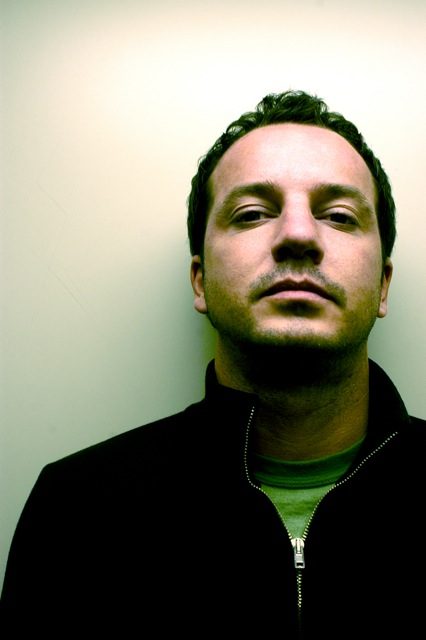
Guest hours on John Digweed’s Kiss 100 show were a peculiar format, and a useful one.
Sixty minutes. No warm-up, because Digweed has already done that in the first half. No four-hour arc to hide inside. You get one hour of radio, a large audience that trusts the host rather than you, and a fairly direct question: what do you actually sound like?
Max Graham’s answer on 12 October 2002 is heavier than you might expect if your picture of him was formed later.
By 2002 Graham had been on the Canadian club circuit for years, had a couple of records circulating widely, and had mixed Transport 4 the previous year. He wasn’t a new name. What he hadn’t yet become was the trance-leaning figure that the Cycles era eventually made him. This hour catches him in between: still firmly progressive, but working the tougher, more percussive, breaks-adjacent end of it rather than the melodic side.
The programming is compact and forward-leaning. Records don’t get twelve minutes to unfold; they get long enough to make their point and then they move. That’s partly a function of having an hour, but it also suits Graham’s instincts, which have always been closer to punch and momentum than to slow-burn patience. Where Nick Warren would take the scenic route, Graham keeps the car in third gear and puts his foot down.
The identified portion of the set — and it is only a portion, since the surviving tracklist for the broadcast is incomplete — includes Ocean Wave vs Progression, Spectdrum, Remark, an early version of Graham’s own “Crank”, Stuart B, SixteenBlondes, Kobbe & DJ Nitro and Bryan Zentz. That’s a useful list, not because you need to go hunting for each record, but because of what it tells you about the mood: this is tech-leaning, bass-heavy, slightly mechanical progressive music, some way removed from the widescreen melodic stuff the genre is usually remembered for.
Hearing “Crank” in an early form inside his own guest mix is the interesting bit. Producer-DJs testing their own material on national radio is standard practice now; in 2002 it was still the main way an unreleased record got heard by anyone who mattered. The track fits the hour without dominating it, which is more restraint than plenty of DJs showed with their own productions.
The wider context matters too. Digweed’s Kiss 100 residency — and the Transitions brand that grew out of it — functioned as a filter for the international progressive scene. Getting a guest hour wasn’t just exposure; it was an endorsement from the DJ whose taste defined the genre’s centre of gravity. Plenty of careers got a serious push from these broadcasts.
What this recording isn’t is a career-defining artefact. It’s an hour of radio: tight, dark, functional, no grand concept. That’s precisely why it’s worth having in the Archive. The famous mixed CDs were curated objects, mastered and sequenced and thought about for weeks. A guest hour on a Saturday night show is closer to what a DJ actually did.
And it holds up. Progressive music in 2002 gets written off as the beginning of the decline, which is lazy. What was happening was a split: one branch heading towards bigger, brighter trance, the other going darker and techier. Graham is standing at the junction here, and he sounds entirely comfortable.
One hour. Play it while you’re doing something else and see how quickly you stop doing the something else.
Recommended if you like: The tougher, breaks-leaning end of early-2000s progressive house, John Digweed's Kiss 100 and Transitions broadcasts, and DJs who prefer momentum to slow-burn patience.