Hernán Cattáneo: Buenos Aires and the Progressive House Story Britain Sometimes Forgets
Progressive-house history gets very British very quickly. Renaissance. Sasha. Digweed. Cream. Oakenfold. Global Underground. All important. But spend too long looking at the genre from Britain and you can accidentally convince yourself the rest of the world was waiting around for a box of twelve-inches to arrive from Heathrow. Hernán Cattáneo completely ruins that version of the story. Good.
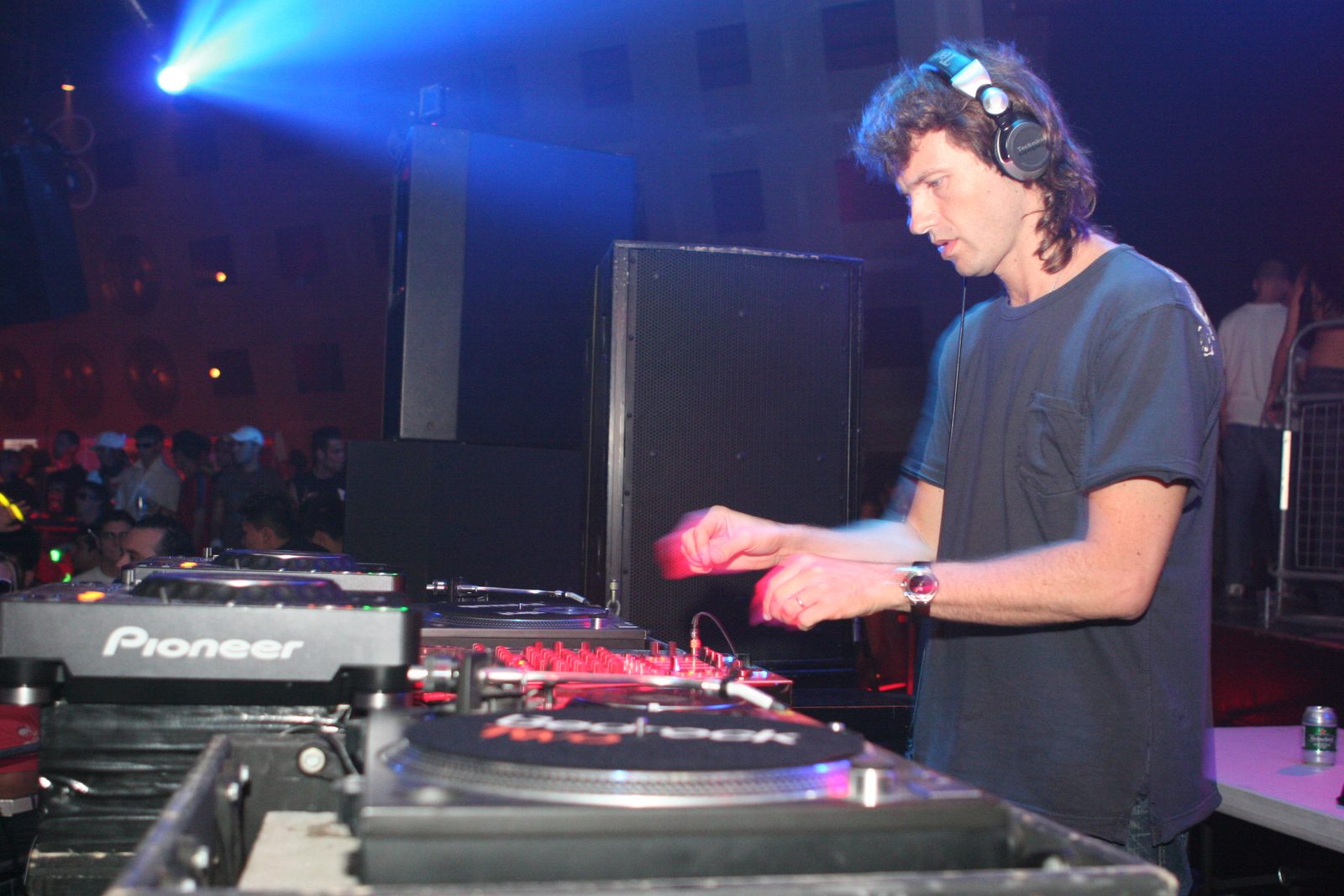
Buenos Aires wasn't waiting for somebody to teach it dance music
Cattáneo grew up in Buenos Aires and came to electronic music through a much broader route than a neat progressive-house origin story suggests.
He has talked about being exposed to American house and Detroit techno in the late 1980s, alongside the European electronic music already circulating in Argentina. By the 1990s he was playing professionally and becoming increasingly important to the developing Buenos Aires club scene.
That starting point matters. Cattáneo didn’t become interesting because British progressive DJs eventually visited Argentina. The local scene existed. What happened later was exchange.
Records moved. DJs travelled. The British progressive circuit connected with Buenos Aires, and Cattáneo became one of the people moving in both directions. Much more interesting.
Clubland was the bloody university
The crucial residency was Clubland at Pacha Buenos Aires.
During the second half of the 1990s, the night brought Cattáneo into repeated contact with international DJs including Paul Oakenfold, Sasha, John Digweed and Danny Tenaglia. His own account stresses that Clubland let him play broad sets while learning from the international guests coming through the room.
That is an important distinction. Opening for brilliant DJs doesn’t mean copying them. A resident has another job.
You need to understand your room every week rather than once on tour. You hear what visiting DJs do to your crowd. You learn which records travel well and which only make sense inside whatever scene produced them. And eventually the visitors start learning from you too.
Clubland became Cattáneo’s base while the progressive-house circuit became increasingly international.
Oakenfold opened doors. Cattáneo still had to walk through them
Paul Oakenfold became an important international connection after playing Clubland, and Cattáneo subsequently joined him for touring dates. That visibility contributed to later relationships with Perfecto and Cream.
It is easy to tell this story in the annoying way: Famous British DJ discovers talented South American DJ. Career begins. Everyone applauds.
No.
Cattáneo already had the residency, the audience and the musical identity. Oakenfold provided international access. Those are different things.
And that distinction matters because Cattáneo’s later career never sounds like somebody desperately trying to become an Argentinian Oakenfold. The records are deeper. Warmer. Often more patient. And there is a fluidity around house and progressive music that feels rooted in a scene with its own history.
Clubland 2000 is the one I'd play before explaining any of this
There’s a surviving December 2000 Clubland recording from Pacha Buenos Aires running for nearly three hours. That is the useful document. Not a biography. Not a DJ ranking. The room.
The set moves through Junkie XL, Humate, Schiller, Ariane, Datar and other material across the long progressive/trance crossover that was happening at the time.
And because it runs for almost three hours, Cattáneo gets to behave like a resident rather than somebody recording a sixty-minute promotional mix. Sections settle. The mood moves. Tracks don’t all have to justify themselves immediately.
This is why the Argentina story belongs in TMA. It isn’t an interesting footnote to British progressive house. It is progressive house actually happening somewhere else.
Perfecto Presents: South America made the argument portable
In 2002, Perfecto Presents... Hernán Cattáneo — South America turned that identity into a two-disc commercial mix.
CD1 moves through Gary Dubbs, Weekend World, PQM, Interflow and G-Pal before finishing with Cattáneo and Martin Garcia’s Landing. CD2 includes Circulation, Shmuel Flash, Lemon8, Sander Kleinenberg, Evolution, Tilt and a Nick Muir remix of Archive.
Look at that second disc. Deep progressive house. Progressive trance. Tilt. Sander Kleinenberg. Nick Muir. Exactly the records that show why genre arguments around 2002 become increasingly tedious.
Cattáneo doesn’t need to choose one side. The whole point is how the records behave together.
The title South America is also significant. Global mix-CD culture spent years attaching British and European DJs to cities around the world. Here was an Argentinian DJ placing an entire region on the front of his own international release. That changes the perspective nicely.
The Renaissance relationship is where Britain finally catches up
Cattáneo’s relationship with Renaissance became particularly important in the mid-2000s, beginning with the Masters Series in 2004.
That lands slightly beyond TMA’s central 1990s/early-2000s window. But it matters because Renaissance is one of the brands most closely associated with the British origin story this site constantly revisits.
By the time Cattáneo enters that catalogue, progressive house has travelled. The production is different. Britain is no longer the unquestioned centre.
Buenos Aires has become one of the places where the genre’s long-form, melodic side continues thriving while parts of the UK scene are fragmenting into darker progressive, breaks, tech house and other directions.
That is why the Cattáneo story becomes especially useful when we ask what happened to progressive house after 2001. It didn’t simply disappear. Some of it moved.
The South American approach isn't a genre preset
Cattáneo has described his DJing in terms of playing a wide range of music rather than one rigid progressive formula.
You can hear why. His sets can be deep without becoming oppressive. Melody is important, but it usually sits inside the structure rather than constantly dominating it. House groove stays alive underneath a lot of the progressive material.
And the longer the set, the more obvious the appeal becomes.
That last bit matters. Cattáneo is another DJ who makes much less sense if you judge him through individual big tunes. The records become important because of where he puts them. Sound familiar?
Why Hernán Cattáneo belongs in The Mix Archive
Because TMA gets the history wrong without him. Simple as that. Not factually wrong. Perspective wrong.
If the archive only follows British DJs travelling outwards, progressive house starts looking like something Britain created and everybody else consumed.
Cattáneo shows the other half. Buenos Aires had its own audience. Clubland created its own resident culture. International DJs came into that room. Cattáneo went out into theirs. Perfecto gave him a wider platform. Renaissance later made him part of one of progressive house’s most famous British institutions.
The traffic went both ways. And the music benefited from it.
There is another reason too. Cattáneo represents a version of progressive house that survived the early-2000s fragmentation without becoming trapped in nostalgia.
The production changed. The technology changed. The record labels changed. The long-form instinct stayed.
Build slowly. Let melody matter because you haven’t spent the previous hour drowning the listener in it. Trust the room.
That approach works in Mansfield. It works in New York. It works in Buenos Aires. Funny that.
Signature sound
Deep, melodic progressive house with the house groove still clearly underneath it.
Long programming arcs that make much more sense over two or three hours than fifteen-minute highlights.
Progressive and trance influences allowed to overlap without turning the set into anthem soup.
A warmer personality than some of the darker early-2000s progressive that surrounded him.
Strong resident-DJ instincts: build the room first, worry about individual moments afterwards.
Where to start
Clubland, Pacha Buenos Aires — December 2000. Start here because it gives you nearly three hours of Cattáneo inside the room that made him.
Perfecto Presents... South America CD1 — 2002. Then hear the commercial mix version: more polished, more portable, but still rooted in deep progressive programming.
Perfecto Presents... South America CD2 — 2002. Finish with the more obviously TMA-facing disc: Circulation, Sander Kleinenberg, Evolution, Tilt and Nick Muir territory.
Possible future archive additions
Clubland, Pacha Buenos Aires
Recommendation only — no Archive entry yet.
Perfecto Presents... South America (CD1)
Recommendation only — no Archive entry yet.
Perfecto Presents... South America (CD2)
Recommendation only — no Archive entry yet.
Key facts
- Origin
- Buenos Aires, Argentina
- Key residency
- Clubland at Pacha Buenos Aires
- Core TMA period
- Late 1990s to early 2000s
- International connection
- Paul Oakenfold / Perfecto / Cream
- Perfecto Presents South America
- 2002
- Renaissance Masters Series
- Began 2004 (slightly beyond the core period but historically relevant)
Related archive listening
Paul Oakenfold
The Clubland guest who became Cattáneo’s route into Perfecto and the wider international circuit.
John Digweed
Another Clubland visitor, and the clearest example of the long-form programming instinct Cattáneo shares.
Why progressive house changed after 2001
Where the genre went when Britain stopped being the automatic centre of it.
When progressive house went to America
The other half of the export story — useful beside the South American version.
Global Underground 012: Buenos Aires (CD2)
A British DJ recording in Cattáneo’s city, which makes the two-way traffic very easy to hear.
Join the conversation
Discuss classic progressive house and trance, share memories and discover more mixes with The Mix Archive community.
Visit the Facebook group (opens in a new tab)