Anthony Pappa: Melbourne, Renaissance, Nubreed and the Long Game
Anthony Pappa tends to get introduced as the technically brilliant one, which is true and also slightly insulting. Plenty of DJs can mix cleanly. What Pappa did with that ability — harmonic, patient, quietly relentless programming across Renaissance, Nubreed and Balance — is the reason people still dig his mixes out.
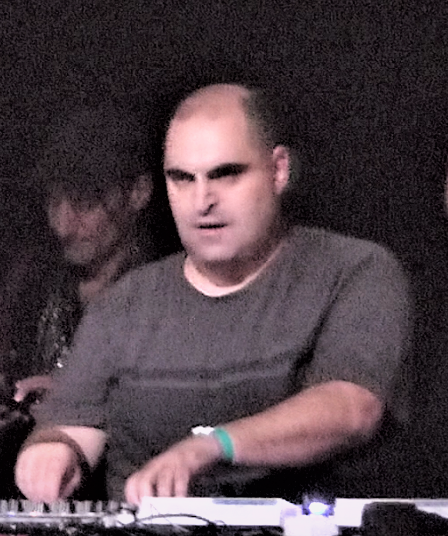
Melbourne first
Pappa grew up in Melbourne and started DJing in clubs there as a teenager, which is worth stating plainly because the British version of progressive-house history has a habit of beginning everybody’s story at Heathrow.
He was already a working club DJ before Britain had heard of him. What changed things was a 1993 Mixmag bedroom-DJ competition, which he won, and whose prize was a set at Ministry of Sound.
That’s a fairly ridiculous route into the UK circuit — a magazine competition — and it says something about how the scene worked at the time. There was no established pipeline for an Australian DJ. There was a contest, and he took it.
Moving to Britain in 1995
Pappa moved to the UK in May 1995, at the exact moment progressive house was becoming a serious commercial proposition rather than a Mixmag argument.
He worked at the Stress Records and DMC offices, which put him inside the record industry rather than politely outside it, and he started playing Renaissance — then about as good an endorsement as the scene had to offer.
It’s an unglamorous version of a breakthrough: day job in the industry, gigs at night, reputation built one room at a time. No mythology, no origin story anyone bothered to romanticise.
Freefall and “Skydive”
Production came alongside the DJing. As Freefall, with Alan Bremner, Pappa made records that fitted precisely into the sets he was playing.
“Skydive” is the one people remember, and it’s a good example of the same instinct that runs through his mixes: it builds, it holds, and it doesn’t panic about arriving.
He was never a prolific producer in the way some of his contemporaries were, and his reputation has always rested more on programming than on a catalogue. That’s fine. Not every important DJ needs a discography to defend.
Nubreed 001
In 1999 Global Underground chose Pappa to helm the first edition of Nubreed, its new series for DJs who hadn’t yet become household names. It was released in 2000 and expanded his international profile considerably.
The choice makes complete sense in hindsight. Nubreed’s whole premise was that the mixing had to carry the record, because there was no superstar narrative attached. Pappa was ideal for that: dark, controlled, harmonically careful, and comfortable letting a disc tighten by degrees rather than lunging at a peak.
CD1 is now in the Archive and in the Classic Chart, and it holds up better than a lot of louder releases from the same year.
Resolution, Balance and after
Resolution followed in 2002. Then Balance 006 in 2004, which is the release where the range gets obvious — one disc exploring progressive breaks, the other pushing into tougher 4/4 and tech-progressive territory.
Two discs, two fairly different arguments, both convincingly made. If you’ve only heard the Nubreed material and filed him as the dark-progressive specialist, Balance 006 will annoy you pleasantly.
Pappa has kept working since, and the Balance connection in particular has aged into something like a long-term relationship rather than a one-off booking.
Why he’s worth revisiting
Because the precision was always in service of something. Harmonic mixing isn’t a party trick; it’s what lets a set change key and mood without the room noticing it’s being moved.
And because he sits in the interesting layer of this history — good enough to be chosen to open a Global Underground series, never quite marketed into legend. That combination usually means the records were doing the work.
Signature sound
Harmonic, technically precise mixing where transitions almost disappear
Dark, controlled progressive house that tightens gradually rather than peaking early
A comfortable relationship with trance-adjacent and techier records without abandoning patience
Progressive breaks as a genuine second gear, not a novelty
Where to start
Global Underground: Nubreed 001 (CD1) — the clearest statement of the method
Balance 006 (2004) — for the breaks disc and the tougher 4/4 side side by side
Any long Renaissance-era set if you want to hear the reputation being built
In The Mix Archive
Global Underground: Nubreed 001 (CD1)
The first Nubreed volume: dark, patient turn-of-the-millennium progressive house, now in the Classic Chart.
Possible future archive additions
The Journey
An earlier mixed release from the Renaissance-era years — recommendation only, not yet in the Archive.
Resolution
The follow-up to Nubreed 001, and worth hearing next.
Balance 006
Two discs: progressive breaks on one, tougher 4/4 and tech-progressive on the other.
Key facts
- From
- Melbourne, Australia
- Started
- Club DJing in Melbourne as a teenager
- 1993
- Won a Mixmag bedroom-DJ competition; the prize was a set at Ministry of Sound
- Moved to the UK
- May 1995
- Day job
- Stress Records / DMC offices
- Residency
- Played Renaissance
- Production
- Freefall with Alan Bremner — “Skydive”
- Nubreed 001
- Chosen in 1999, released 2000
- Later mixes
- Resolution (2002), Balance 006 (2004)
Related archive listening
Nubreed: the series that looked past the superstars
The full story of the series Pappa opened, and the five volumes that followed.
Danny Howells
Nubreed 002, and the funkier route through the same moment.
Global Underground and the sense of place
The main series running alongside Nubreed.
Communicate (CD1)
The same darkening in progressive house, from the other end of the roster.
The Classic Chart
Where Nubreed 001 sits.
Join the conversation
Discuss classic progressive house and trance, share memories and discover more mixes with The Mix Archive community.
Visit the Facebook group (opens in a new tab)