HR3 XXL Clubnight
- Progressive House
- Progressive Trance
- Progressive
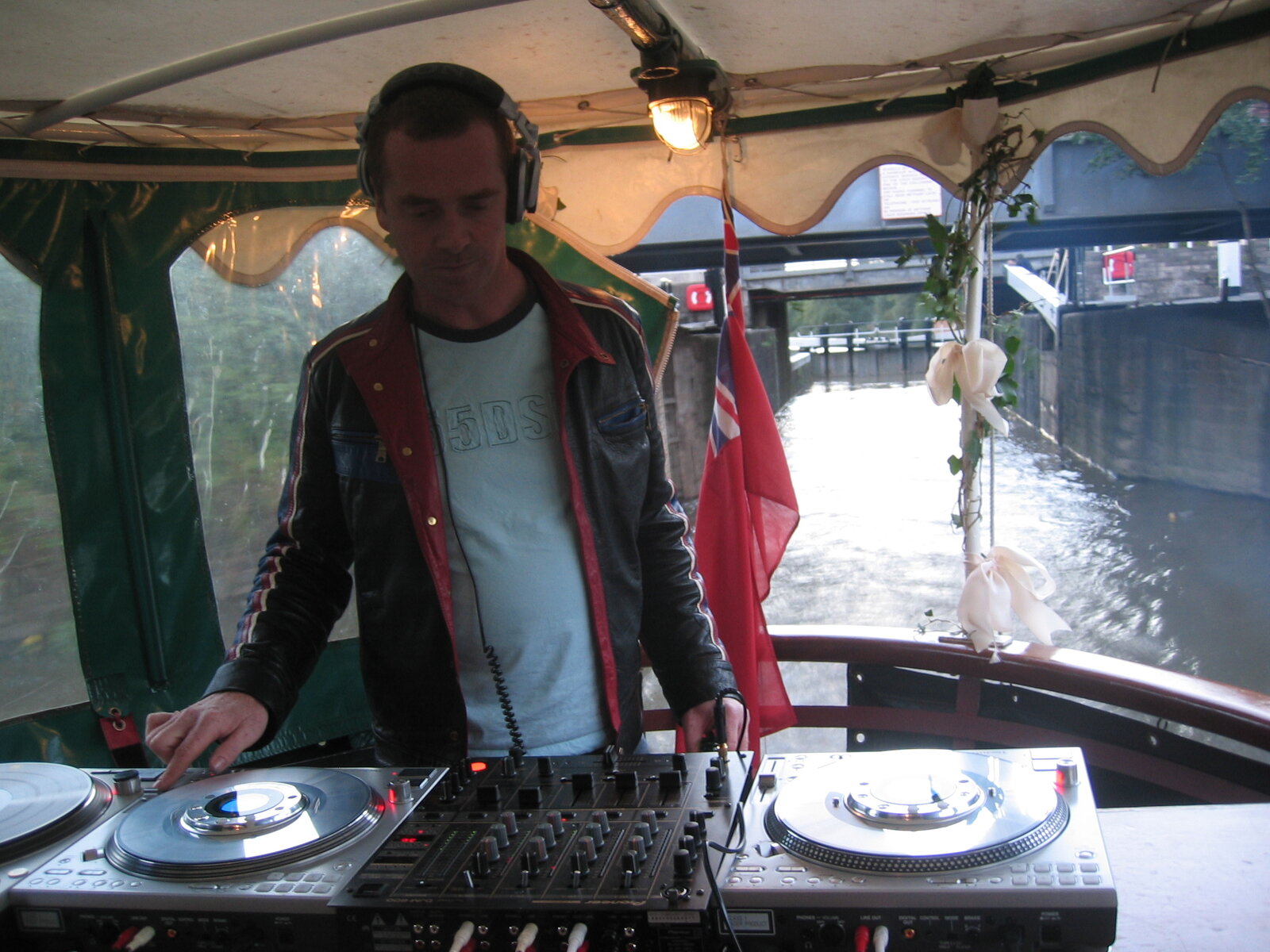
Three hours is the whole point of this one.
Most of what survives from Nick Warren’s peak years is an hour of radio or a seventy-minute CD, and both formats quietly misrepresent what he was actually good at. Warren’s method needs length. Give him sixty minutes and he’ll do a perfectly good job. Give him three hours on German radio and you can finally hear the thing working as designed.
This is HR3’s Clubnight, recorded on 28 October 2000 — a radio show rather than a club recording, so there’s no venue to romanticise. What there is instead is space, and Warren uses all of it.
The first stretch is patient to the point of being almost undemonstrative. Deep house, restrained percussion, very little in the way of melodic signposting. If you came in expecting the Global Underground version of Nick Warren — the widescreen, emotional, breakdown-heavy one — the opening will feel like a DJ deliberately withholding. He is. That withholding is the investment that pays off two hours later.
What follows is a slow migration rather than a series of gear changes. Progressive house tightens. Breaks appear and then recede. The trance element builds gradually across the second hour rather than arriving as a decision, and by the time the set is genuinely melodic and expansive you’d struggle to name the record where that happened. Sirus, Peace Division, Trisco, Sasha & Emerson’s “Scorchio”, Innate, Quivver, PMT, Loafer, Way Out West, Futureshock, James Holden, Andy Moor, Schiller and Oliver Lieb all appear across the three hours, and that list on its own tells you how wide the net was in late 2000 — deep house producers, progressive breaks, and trance names sitting in the same set without anyone finding it remarkable.
That breadth is the historical value here. October 2000 is the exact moment when the genre borders had become effectively decorative. A Peace Division record and an Oliver Lieb record have very little in common on paper. Inside this mix they’re two tools doing different jobs for the same purpose, and the joins don’t show.
The pacing deserves specific attention because it’s so unfashionable now. Warren regularly leaves a record running long past the point where a modern DJ would move, and he does it because the next transition works better if the previous groove has fully settled. Nothing gets cut short to keep the energy up. There’s no anxiety in the programming at all — no sense of a DJ checking whether the audience is still interested.
On radio, that takes a certain nerve. Radio rewards immediacy: hooks, recognisable records, momentum. Warren essentially ignores that and programmes as though he’s playing a long club night to people who came specifically to hear him. HR3 gave him three hours and he treated them as three hours rather than as three separate one-hour opportunities.
It also makes an interesting comparison with his Essential Mix broadcasts. Those are tighter and more obviously curated, because two hours on Radio 1 has to justify itself. This is looser, and in places noticeably less concerned with impressing you. Some of the middle passages are simply a good DJ keeping a good groove going, which is a mode almost nobody preserves.
What you get from all that patience is a genuinely different kind of listening. There’s no obvious moment to clip and share. The peaks are large, but their size is entirely a function of how long the flat sections lasted, and pulled out of context they’d sound ordinary.
Which is a reasonable summary of Warren’s whole career, really. Very few individual records in his sets are startling on their own. The programming does the work, and the programming only becomes visible over hours.
Set aside an evening. Don’t skip. This is one of the better arguments the Archive has for why long-form mixes mattered.
Recommended if you like: Long-form radio sets, the Global Underground era at its most patient, and DJs who let deep house, progressive breaks and trance sit in the same three hours without forcing the issue.