Nick Warren
You probably owned a Nick Warren mix at some point without quite registering the name — he’s one of those DJs who gets slightly screwed by the way dance-music history is usually told. He never had the same mythology machine around him as Sasha or Oakenfold, but from Bristol and Massive Attack to Cream, Way Out West and an extraordinary run with Global Underground, he was bloody everywhere. More importantly, the mixes still explain why: patient programming, long blends, melody without cheese, and very little interest in forcing a peak before it’s ready.
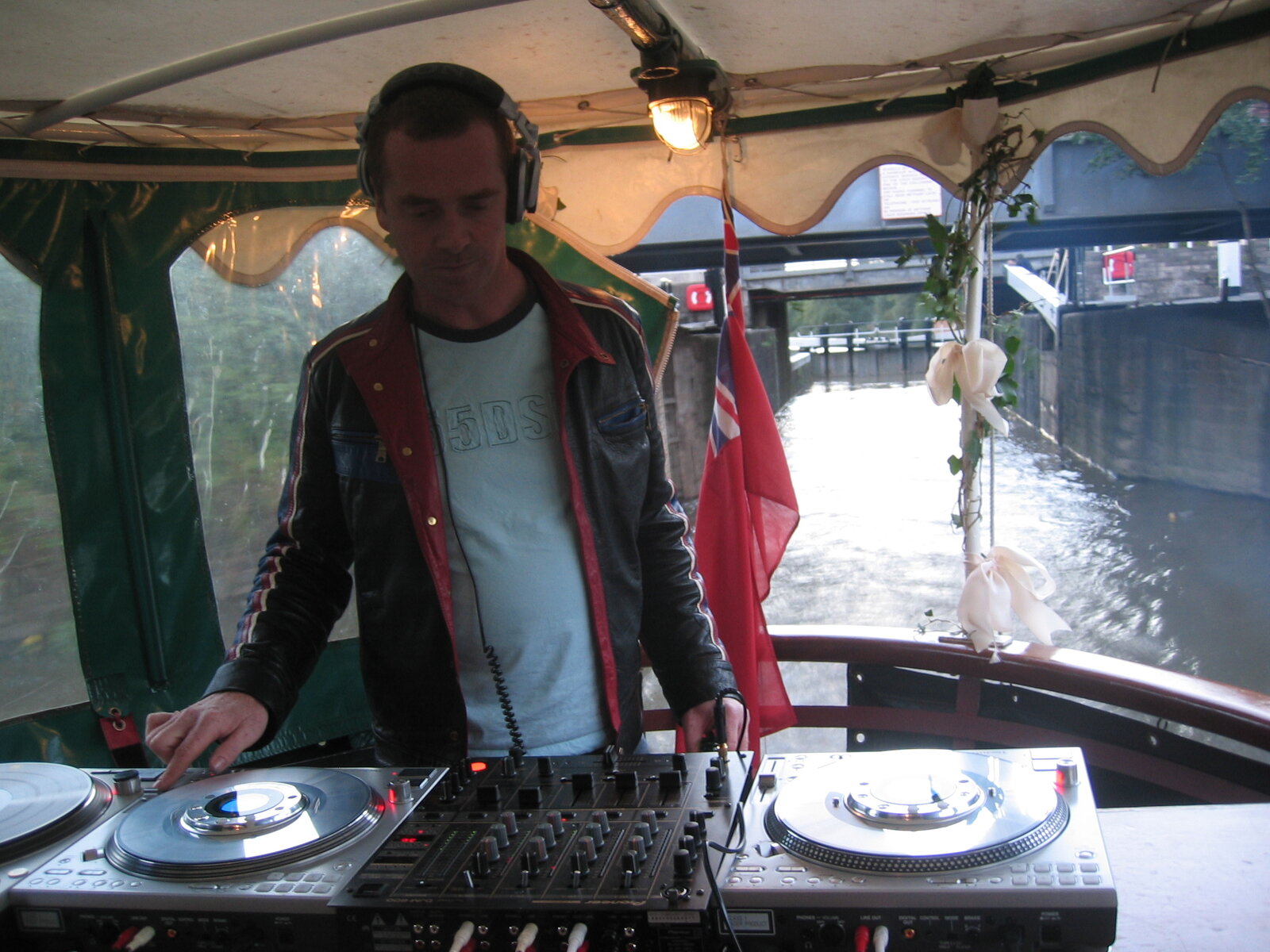
Bristol before progressive house became a job title
Warren started DJing in Bristol in 1988, and the early picture is a lot broader than the progressive-house label that later followed him around. Reggae, dub, downtempo, hip-hop and house all fed into what he was playing. That Bristol background matters because his later sets never sounded as though they’d been assembled from one tidy genre shelf.
He played around the city’s club and art-school circuit, worked in a record shop and became part of a scene where electronic music, bass music and the wider Bristol sound were rubbing shoulders rather than staying in their own lanes.
Massive Attack then took Warren on as a tour DJ. It’s an easy line to throw into a biography and move past, but it tells you quite a lot. Long before Global Underground was flying DJs around the world for glossy city-branded CDs, Warren was already learning what it meant to programme music for different rooms, crowds and countries.
Cream, Way Out West and a career running in two directions
Liverpool’s Cream pushed Warren into a much bigger club environment during the mid-1990s. He became one of the residents as the superclub era was gathering speed, but his sets rarely sounded like somebody trying to win the room every three minutes. Even at scale, the appeal was the build.
At roughly the same time, Jody Wisternoff moved from being a familiar face around the Bristol record-shop scene into a studio partnership with Warren. They formed Way Out West, bringing Warren’s Balearic and house instincts together with Wisternoff’s hip-hop, drum-and-bass and production background.
Tracks including ‘Ajare’ and ‘The Gift’ gave Way Out West a life that wasn’t simply an extension of Warren’s DJ career. That distinction is important. He wasn’t a DJ who occasionally stuck his name on a production; Way Out West became a proper parallel body of work with its own sound.
The two sides fed each other anyway. The melodic instinct you hear in Way Out West turns up repeatedly in Warren’s sets, but usually without turning them into a procession of obvious hands-in-the-air records.
Global Underground found exactly the right DJ
Global Underground 003: Live in Prague arrived in 1997 and started one of the longest relationships between a DJ and the series. Warren went on to mix eight Global Underground editions between 1997 and 2008.
That run is a huge part of his reputation, but treating all eight as interchangeable ‘Nick Warren progressive house’ misses the point. Brazil, Budapest, Amsterdam, Reykjavík, Shanghai and the rest catch the production around him changing while the basic Warren approach stays recognisable.
Budapest can be tougher and more urgent. Amsterdam gives the music more air. Shanghai in 2005 starts CD2 in broken-beat territory before moving through acid, tougher progressive rhythms and a much warmer final stretch. The records change; the pacing doesn’t suddenly lose its head.
Warren has said the Global Underground albums were heavily planned rather than simple recordings lifted straight from the booth, with months spent sourcing music and building the final programme. That makes sense when you hear them. These are mixes designed to survive repeat listens, not just prove what happened in a club on one night.
And that, really, is why the partnership with Global Underground worked so well. The label wanted a DJ mix to feel like an album. Warren already mixed like the beginning, middle and end actually mattered.
He doesn’t sound remotely arsed about rushing
The easiest way to understand Warren is to listen for what he doesn’t do. He rarely sounds in a hurry to get to the next recognisable record. He doesn’t need every transition to announce itself, and he doesn’t build a set around constant resets, drops and applause points.
Instead, he lets a groove settle. Bass and melody do a lot of the work, and individual tracks are often allowed enough time to change the mood properly before the next one arrives.
That can make Warren look less dramatic on paper than some of his contemporaries. It also makes the good mixes age extremely well. A huge breakdown that felt incredible in 1999 can date quickly. Proper pacing tends not to.
His 1995 Essential Mix is a brilliant example. It’s deep, rolling and patient without becoming background music. By the 1999 broadcast, the sound is brighter and hits harder, but the structure underneath is still recognisably his.
Why Nick Warren belongs in The Mix Archive
For this archive, the sweet spot runs from the mid-1990s Essential Mix period through the classic Global Underground years and into the early 2000s.
That stretch catches progressive house turning from something strongly tied to individual clubs, residencies and record shops into an international culture carried by Radio 1, mix CDs and touring DJs. Warren sits right in the middle of that change.
He’s also useful because he stops the history becoming a story about three or four giant personalities. Progressive house wasn’t only Sasha mythology, Digweed darkness and Oakenfold spectacle. Warren represents another version of it: warmer, controlled, melodic and quietly confident.
Later work with Hope Recordings and The Soundgarden shows the career didn’t end when the classic mix-CD era did. That material mostly sits outside this site’s core period, but the longevity makes the earlier records more interesting, not less.
There’s a reason people still go back to Prague, Budapest, Amsterdam and those Essential Mixes. They’re not museum pieces. Put one on and Warren still sounds like he knows exactly where he’s going — he’s just in no fucking rush to tell you.
Signature sound
Patience first. Long blends, rolling rhythms and tracks given enough room to establish themselves before the next idea arrives.
Melody matters, but Warren rarely uses it as cheap emotional punctuation. Bass, atmosphere and gradual movement usually do as much work as the obvious hook.
His Bristol background keeps the palette broader than a simple progressive-house label suggests: breaks, dubby space and left-field choices regularly sit beside straight four-to-the-floor material.
The constant is control. Warren’s best transitions don’t shout ‘nice mix’; they make you realise five minutes later that the whole room has moved somewhere else.
Where to start
The Essential Mix from 20 August 1995 is the place to begin if you want Warren before the Global Underground machine really gets moving: deep, groove-led and ridiculously patient.
From there, jump to the 3 October 1999 Essential Mix. It’s brighter, tougher and much closer to the scale of his Global Underground years, which makes the contrast between the two broadcasts genuinely useful.
Global Underground 028: Shanghai CD2 from 2005 is the one to finish on. It sits beyond the archive’s main era, but it proves the method survived: different production, same refusal to rush the bloody thing.
In The Mix Archive
Essential Mix — 20 August 1995
The one I’d start with. Deep, rolling progressive house that earns its bigger moments instead of throwing them at you.
Essential Mix — 3 October 1999
Four years later the scale has changed: tougher drums, brighter melody and the Global Underground years sitting much closer to the surface.
Global Underground 028: Shanghai (CD2) — 2005
Broken beats, acid pressure and a melodic closing run — a later mix that shows Warren changing the records without changing the underlying patience.
Possible future archive additions
Global Underground 003: Live in Prague
The obvious missing piece: Warren’s 1997 Global Underground breakthrough and the beginning of an eight-release relationship with the series.
Global Underground 011: Budapest
One of the tougher Warren GU sets, with more pace and pressure but none of the frantic programming that could have ruined it.
Renaissance: Revelation
A 2001 split release with Danny Howells — useful precisely because the two discs show different progressive instincts sitting side by side.
Key facts
- Origin
- Bristol, England
- DJing since
- 1988
- Period most relevant to this archive
- Mid-1990s to early 2000s
- Key residency
- Cream, Liverpool
- Production duo
- Way Out West, with Jody Wisternoff
- Major mix series
- Global Underground
- Global Underground editions
- Eight releases between 1997 and 2008
- Relevant early editions
- Prague, Brazil, Budapest and Amsterdam
- Notable compilation
- Renaissance: Revelation, with Danny Howells
- Later projects
- Hope Recordings and The Soundgarden
Related archive listening
Renaissance: The Mix Collection (CD1)
The earlier mix-CD culture Warren eventually joined: long-form programming treated as something worth owning and replaying, not disposable compilation fodder.
Essential Mix — 14 January 1996
Another British progressive set built around groove and restraint rather than a constant hunt for the next massive moment.
From the Collector's Shelf
Global Underground 003: Prague
Nick Warren’s first Global Underground is loose, live-feeling and gloriously 1997: Beachball appears almost immediately, the first disc gets tougher and stranger, then Café del Mar and Galaxia push the second disc into full progressive-trance scale.
Global Underground 008: Brazil
Brazil is where Warren sounds fully in control: dark progressive house, breaks, melodic trance and long stretches of less-famous records that make Café del Mar feel like part of a journey rather than the point of one.
Global Underground 011: Budapest
Budapest is Warren tightening the screws: colder synths, firmer drums, Bedrock, L.S.G., Breeder, Tilt and a focused techy-progressive sound that feels much more 3 AM than sunset.
Global Underground 018: Amsterdam
Amsterdam is Warren turning the obvious peaks down: deeper grooves, more space, Way Out West dragged through Peace Division, Fluke, PMT and a second disc that gets stranger and techier before circling back to Eternity.
Join the conversation
Discuss classic progressive house and trance, share memories and discover more mixes with The Mix Archive community.
Visit the Facebook group (opens in a new tab)