DJ Dave Seaman: Renaissance, Mixmag and Global Underground
You’ve almost certainly heard Dave Seaman’s work without clocking his name on the sleeve — he’s one of the great ‘how the fuck was he involved in all of that?’ figures in British dance music. Mixmag, Brothers in Rhythm, Stress Records, Shelley’s, Renaissance, Essential Mix, Global Underground — his fingerprints are all over the period, but he never developed the oversized legend attached to Sasha, Digweed or Oakenfold. Listen back and that almost suits him. Seaman’s best sets are about control, groove and keeping the thing moving for two hours without waving a giant sign every time you’re supposed to be impressed.
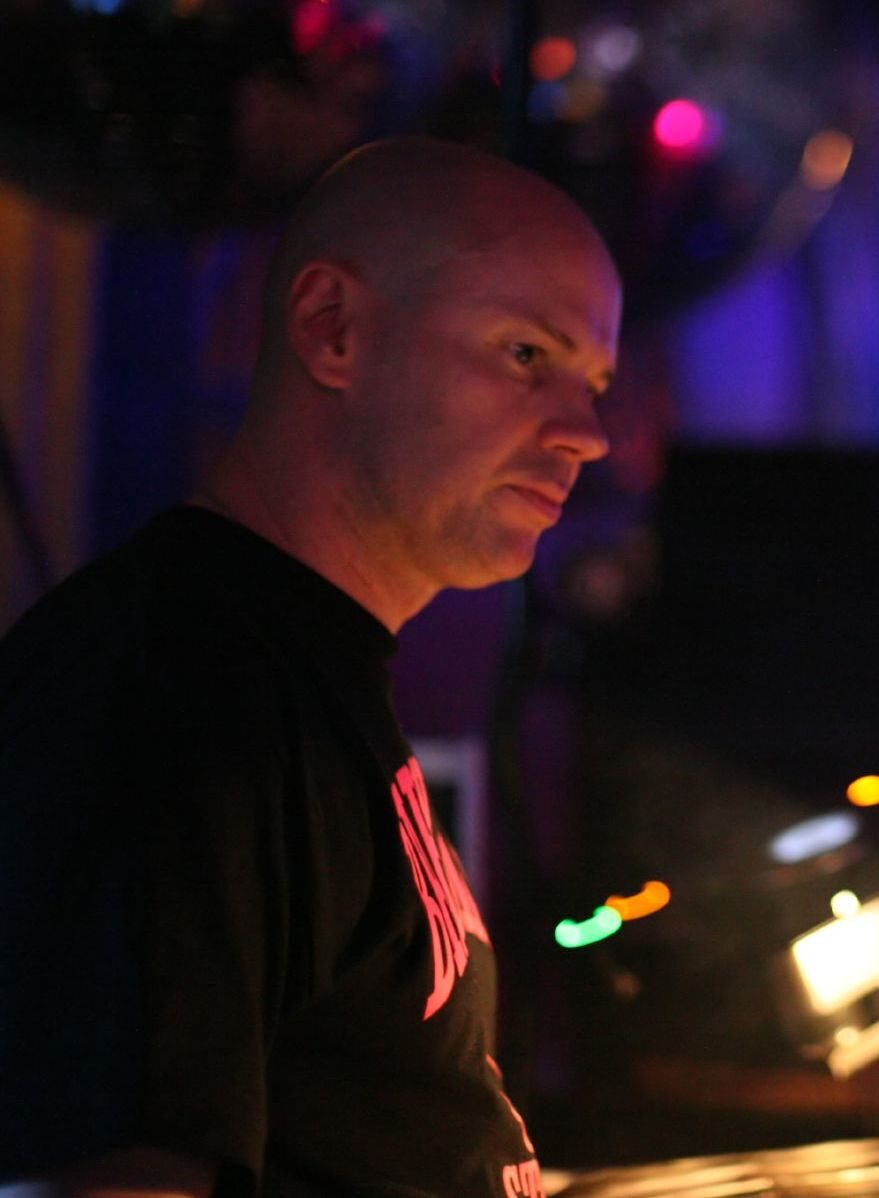
Before the booth, he was already watching the whole scene change from the inside
Seaman’s route into dance music came through the industry side unusually early. A DMC connection and a trip to New York’s New Music Seminar in 1987 led towards an editorial role at Mixmag while the magazine itself was still evolving from a specialist DJ publication into something tracking acid house, rave and the enormous culture growing around them.
That matters because Seaman wasn’t learning the scene from one dancefloor. He was watching records, DJs, labels, promoters and audiences collide at exactly the point British club culture was changing shape.
His first proper DJ booking came at Shelley’s Laserdome in 1990 on a bill that also included Sasha and Laurent Garnier. In retrospect it looks ridiculously neat: one of the future connecting figures of progressive house standing in the same room as somebody who would later receive most of the mythology.
Seaman never became the myth. He became the bloke who kept turning up everywhere important.
Brothers in Rhythm gave him a producer’s ear before the mix-CD years really took off
With Steve Anderson, Seaman formed Brothers in Rhythm. The partnership scored a UK Top 20 hit with ‘Such a Good Feeling’ in 1991 and then built a much wider production and remix career that reached far outside progressive-house clubland.
David Bowie, New Order, U2, Placebo, Garbage, Pet Shop Boys and other mainstream artists sat inside that studio world, while Seaman’s DJing increasingly moved into deeper house and progressive territory.
Those two careers weren’t the same thing, but the studio experience matters when you listen to him mix. Seaman tends to hear records as arrangements rather than just tracks. He leaves room for sections to develop, understands when repetition is doing useful work and rarely cuts something off because he’s panicking about the next tune.
Alongside Nick Gordon Brown, he also co-founded Stress Records, placing him on the label side of the scene as well as in the booth. Sasha, John Digweed and Andy Cato all sit inside that wider Stress story.
Magazine editor, producer, remixer, label co-founder, DJ. No wonder the biography looks like somebody accidentally merged four people.
Renaissance is where all those separate skills start sounding like one identity
Seaman was connected to Renaissance from the early Mansfield period, filling in when Sasha wasn’t playing and becoming part of the club’s wider resident world rather than arriving after the brand was already famous.
That detail is easy to underplay. Renaissance is remembered through Sasha & Digweed because The Mix Collection turned their partnership into a physical landmark, but the club itself depended on more than two names.
Seaman’s Renaissance: The Mix Collection Part 4 arrived in 1996, with Seaman mixing two discs and Ian Ossia the third. It doesn’t carry the original collection’s historical weight, and there’s no reason to pretend it does.
What it does show is that the Renaissance approach could survive another personality. Seaman keeps more of the house groove underneath the progressive structure. He’s less interested in turning every transition into atmosphere and more interested in momentum you can live inside for a while.
The 1996 Essential Mix is Seaman without the packaging
His solo BBC Radio 1 Essential Mix on 14 January 1996 is probably the cleanest place to hear what makes Seaman different from the more mythologised names around him.
It’s chunky, dubby and house-rooted. The word ‘progressive’ is useful because of how the set develops, not because every record sounds like some later stereotype of progressive house.
There isn’t a giant cinematic concept like Oakenfold’s Goa Mix. There isn’t the same widescreen atmosphere as Northern Exposure. It just keeps moving, tightening the groove without making a fucking song and dance about every change.
That sounds less exciting when you describe it, which is probably part of Seaman’s image problem. ‘Extremely good at maintaining pressure for two hours’ is not as sexy a magazine cover as ‘SON OF GOD’.
On the actual recording, though, it works.
Global Underground gave the quiet connector a properly international frame
Seaman’s Global Underground releases — Buenos Aires in 1999 and Cape Town in 2000 — arrived when the series had perfected the idea of turning a DJ, a city and two polished discs into one package.
The format suited him because it rewarded patience. Buenos Aires is the firmer, more house-rooted statement overall, while CD2 pushes deeper into progressive trance through long controlled builds rather than sudden gear changes.
Cape Town is more spacious and melodic. Its second disc moves through Quivver, Planisphere, Way Out West, James Holden and Junkie XL without turning the tracklist into a list of applause points.
Neither release gets talked about with the same reverence as Sasha’s San Francisco or Ibiza, or some of Nick Warren’s most loved volumes. That may be fair if we’re measuring cultural mythology. It’s much harder to justify if we’re measuring whether the discs still hold together.
Seaman’s GU work is exactly what he was always good at: reliable sounds like an insult until you realise how difficult it is to make two hours consistently interesting without resorting to cheap drama.
He gets less credit because ‘connector’ is a terrible superstar-DJ brand
Seaman’s career has no single origin myth that swallows everything else. No one Ibiza epiphany. No permanent duo. No one radio broadcast everybody is required to call sacred.
Instead, he connects parts of the history that are usually discussed separately. Mixmag connects him to the media documenting acid house. Brothers in Rhythm connects him to production and pop remixing. Stress connects him to the label ecosystem. Renaissance puts him inside progressive club culture. Global Underground carries him into the international mix-CD era.
That spread probably diluted the public image. It also makes him one of the more useful people to follow if you want to understand how the scene actually functioned rather than only remembering its biggest personalities.
The irony is that his DJ style does the same thing. It joins sections together without making the join itself the headline.
Why Dave Seaman matters
Dave Seaman is a reminder that progressive house was not built entirely by heroic figures standing in front of lasers.
Some people edited the magazines, ran the labels, produced the records, remixed the pop acts and then still had to walk into a booth and make two hours work.
Seaman’s best mixes reward the same thing his career does: paying attention to the stuff between the obvious landmarks.
He stays closer to house than many of the trance-facing DJs around him, even when the records get darker. The bass and groove usually remain the engine. Melody arrives when it has something useful to do.
If Oakenfold sells you the drama and Sasha sells you the atmosphere, Seaman sells you something less glamorous and bloody valuable: trust. Put the mix on. He’ll get you there.
Signature sound
House first, even when the catalogue says progressive: chunky low end, dubby space and groove carrying more weight than giant breakdowns.
Long blends and records allowed to develop. Seaman rarely sounds nervous that the listener might leave if something doesn’t explode within sixty seconds.
The Global Underground years add more polish and melodic lift, but the basic control stays intact.
Compared with Oakenfold’s theatre or Sasha’s atmosphere, Seaman’s strength is dependable momentum — which sounds boring until you hear how few DJs can actually sustain it.
Where to start
The Essential Mix from 14 January 1996 is the cleanest, least packaged example of Seaman’s groove-first progressive style, so start there.
Global Underground 012: Buenos Aires CD2 gives you the darker, more trance-facing late-90s version next.
And Global Underground 016: Cape Town CD2 closes things out, opening the sound up into something more spacious and melodic without losing the restraint.
In The Mix Archive
Essential Mix
The best starting point: two hours of chunky, dubby, house-rooted progressive music that keeps tightening without begging for a giant drop.
Global Underground 012: Buenos Aires (CD2)
The darker half of Buenos Aires, where Seaman lets progressive trance into the room without suddenly losing the groove-first discipline.
Global Underground 016: Cape Town (CD2)
More spacious and melodic than Buenos Aires, with Quivver, Planisphere, Way Out West and Holden inside another properly patient two-disc-era programme.
Live at Carnival XIII, Moscow
Three hours and ten minutes of surviving club recording — the full arc, without a CD running time cutting it down.
Live at Electrolux Festival, Reykjavík
Seventy-five minutes at an Icelandic festival, and a sharp contrast with the Moscow set from the year before.
Possible future archive additions
Renaissance: The Mix Collection Part 4
The obvious Renaissance gap: Seaman’s two discs would extend the site beyond the Sasha & Digweed origin story and show another resident carrying the brand’s long-form approach.
Global Underground 012: Buenos Aires (CD1)
The house-rooted opening half of Buenos Aires and the natural companion to the existing CD2 entry.
Read the archive entry →Global Underground 016: Cape Town (CD1)
The opening half of Cape Town, useful for hearing how the complete two-disc programme builds before the darker CD2 already in the Archive.
Read the archive entry →Essential Mix — Brothers in Rhythm
Seaman and Steve Anderson on Radio 1 together — a rare chance to hear the Brothers in Rhythm partnership outside the studio context.
Global Underground 022: Melbourne
Right on the edge of the site’s core period and useful precisely because it shows where Seaman’s progressive sound had moved by 2002.
Key facts
- Origin
- Leeds, West Yorkshire, England
- Early route into music
- DMC member; a 1987 New Music Seminar trip led towards his Mixmag role
- Mixmag
- Editor for approximately three years during the late 1980s and early 1990s
- First professional DJ booking
- Shelley’s Laserdome, Stoke-on-Trent, 1990
- Brothers in Rhythm
- Formed with Steve Anderson; Alan Bremner joined in 1999
- Early release
- “Such a Good Feeling” reached the UK Top 20 in 1991
- Stress Records
- Co-founded with Nick Gordon Brown
- Renaissance
- Connected to the club from its 1992 Mansfield launch
- Renaissance compilation
- Mixed two discs of The Mix Collection Part 4 in 1996
- Essential Mix broadcasts
- Solo on 14 January 1996; Brothers in Rhythm on 23 June 1996
- Global Underground
- Buenos Aires (1999) and Cape Town (2000)
- Later labels
- Audio Therapy and Selador Recordings
Related archive listening
Essential Mix
Sasha from the earlier Essential Mix era: more atmospheric and mythologised, but built around the same belief that patience matters.
Renaissance: The Mix Collection (CD1)
The Renaissance landmark Seaman’s later Mix Collection followed — warmer and more partnership-driven than his own groove-first approach.
Essential Mix
Warren is another DJ who makes patience sound like a positive decision rather than a lack of ideas.
Essential Mix — The Goa Mix
Oakenfold gives you the opposite 1990s instinct: cinematic detours and giant narrative gestures beside Seaman’s steadier pressure.
Northern Exposure (CD1 — North)
Northern Exposure from the same year, showing just how wide the word ‘progressive’ had become by 1996.
From the Collector's Shelf
Global Underground 012: Buenos Aires
Seaman's patient late-90s progressive build: Underworld's Jumbo opens for nearly eleven minutes, Dutch Liquid lock in the groove, So Damn Beautiful provides earned emotion, and CD2 gets increasingly deep and trance-facing without becoming a hits compilation.
Global Underground 016: Cape Town
Cape Town balances atmosphere, vocals and serious progressive pressure: Moby and Mandalay sit beside Funk Function, Breeder, Way Out West, James Holden and Junkie XL, with Seaman using contrast rather than a parade of obvious peaks.
Global Underground 022: Melbourne
By Melbourne, Seaman's GU sound is darker, cleaner and more early-2000s: ambient fragments, broken textures, Cass & Slide, Orbital, Infusion and long progressive records make this feel like a genuine shift from Buenos Aires and Cape Town.
Renaissance: The Mix Collection Part 4
Seaman controls the first two discs, Ossia takes the third. Nearly four hours moving through deep house, progressive house, trance, breakbeat and vocals: Garbage, Sasha, Sarah McLachlan, Björk, Way Out West and Blue Amazon all make sense because the programming holds them together.