Feature · September 2026
Why 1995–2005 Was Progressive House's Golden Decade — and What Came Next
This is The Mix Archive's case, not a law of nature. For roughly ten years, clubs, residents, radio, mix CDs and record labels all happened to reward the same thing: music that took its time. That's what made the decade extraordinary — not some notion that every record from it was brilliant, or that everything since has been rubbish.
Everybody's golden era is the decade they were nineteen. Let's get that admitted at the top, because “it was better then” is usually a statement about your own knees rather than about music.
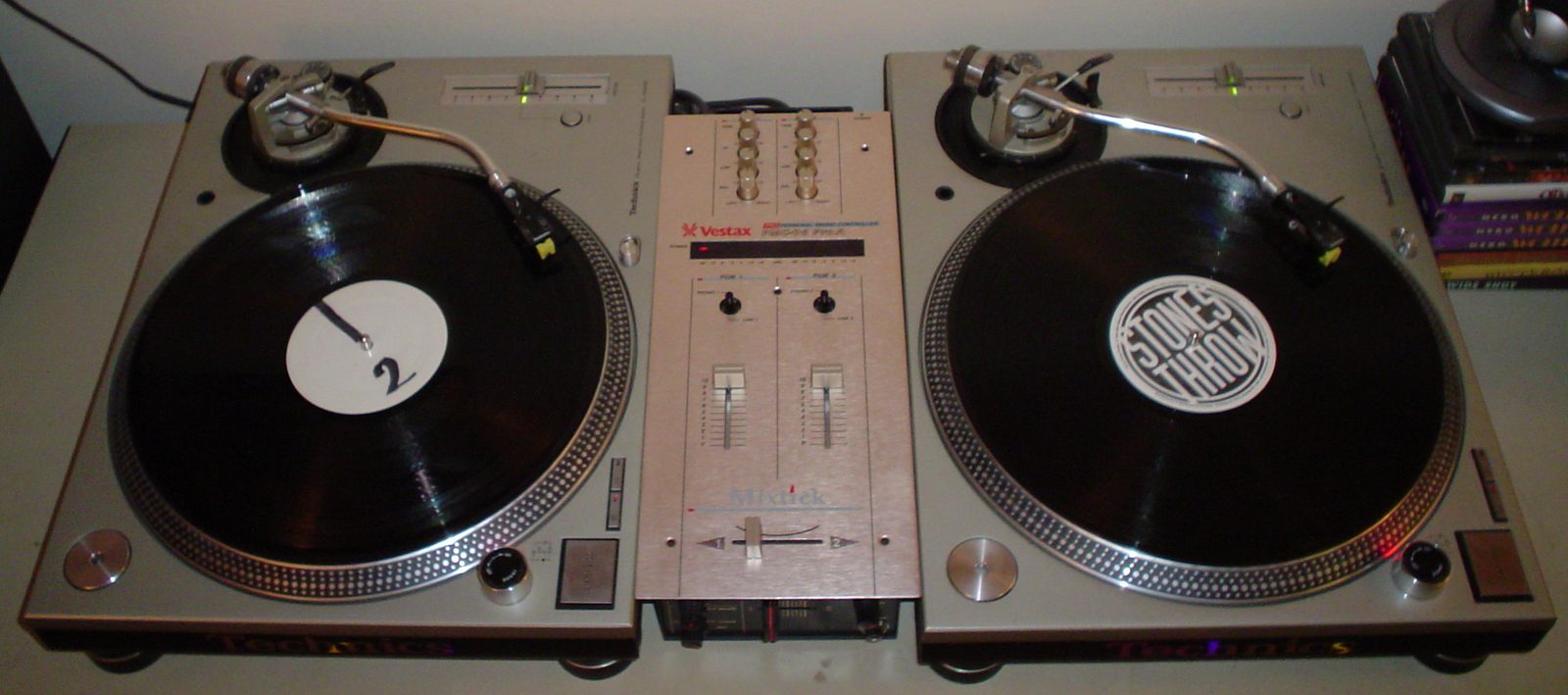
So here's the more defensible version. For about ten years, from the middle of the 90s to the middle of the 2000s, an unusual number of separate things all happened to reward the same quality: patience. Clubs booked long sets. Residents held rooms for years. Radio handed DJs two uninterrupted hours. Labels sold mixes as albums. Vinyl made a set a physical, planned object.
None of those things existed to serve progressive house. They just all lined up in its favour at once, and when they stopped lining up the music changed accordingly.
That's the argument. Not a golden sound — a golden set of conditions.
1995–97: house roots, and learning to hear an arc
The early part of the decade still has a great deal of house audible in it. Warm, vocal, groove-first, and considerably less concerned with being dark than the later mythology suggests. Dave Seaman's January 1996 Essential Mix is a good corrective if your memory of progressive house starts at “moody”.
What changed listeners, though, was format. The Essential Mix gave a DJ two hours on national radio. Renaissance and Northern Exposure treated a mix as a record you'd own rather than a souvenir of a night. People started listening to sets as shapes, with beginnings and middles, and stopped waiting for individual tunes.
Residents did the rest. If you played the same room every week you had to teach your crowd to enjoy the slow part, because you couldn't spend your best records at midnight every time.
The full definition is in our What Is Progressive House? piece; the radio side is covered in Why the Essential Mix Mattered Before Streaming.
“The golden bit wasn't a single sound. It was a decade when clubs, radio, mix CDs and record labels gave patient music enough room to work.”
1998–2000: it goes global, and the borders dissolve
Global Underground put a city on the sleeve and a DJ's name above it, and suddenly this was an international culture with an aesthetic. Northern Exposure got a sequel that was tougher and stranger than the original. Renaissance's own residents got a release of their own.
It's also the point at which arguing about whether something is progressive house or trance becomes a waste of an afternoon. The drums got bigger, the melodies got brighter, and the good DJs simply carried on pacing things the way they always had. Nick Warren's 1999 Essential Mix, set against his 1995 one, makes the case better than any amount of theory.
Global Underground's sense of place is its own piece on this site, and the Nubreed spin-off gets one too.
2001–03: darker, tribal, techier — and more spread out
The warm centre broke up. Percussion got harder, breaks and tech-house pulled at the edges, and a lot of sets got noticeably less friendly. Twilo closed in New York, which felt like an ending, and yet the international circuit kept expanding.
This is the most interesting stretch precisely because it stops being one sound. Nubreed 001 is dark and controlled. Ian Ossia's Mutations is quicker and tighter than his own 1998 disc. Dave Seaman's three-hour Moscow recording still has room for the long gradual build. Jimmy Van M and Chris Fortier in 2003 are patient together in a room the surviving upload never bothers to name, which tells you the patience was the habit rather than the venue.
Several directions at once, in other words — which is what a healthy genre looks like, not a declining one. We go further into this in Why Progressive House Changed After 2001.
2004–05: the tools change, and so does the shape
Digital changed what a set physically was. When your records weigh nothing and you can carry everything, the discipline of choosing forty tracks in advance disappears — and with it some of the commitment that made long builds happen.
Club economics shifted too. Shorter slots, more names per bill, and audiences increasingly assembled by festival lineup rather than by a resident's taste. None of that is a moral failing; it just doesn't reward a twelve-minute record the way a six-hour residency did.
So the centre splintered. It didn't die — a splintered scene is just harder to write a tidy history about.
What came next
Three things happened at once, which is why the story gets told badly.
First, underground progressive carried on, largely through the people who'd been doing it all along. Second, the patience got inherited — the melodic and organic strands that grew through the 2010s are recognisably descended from this decade's pacing, even when the drums are nothing like it. Third, and most confusingly, “progressive house” became a mass-market label for an entirely different big-room sound, which is why a young listener and an old one can use the same two words and mean nothing in common.
Evolution branches. It doesn't queue up in a straight line so we can call one part of it the end.
How the decade moved
1995–1997
House roots and the two-hour arc
Essential Mix broadcasts and album-shaped mix CDs teach listeners to hear a set as a shape rather than a run of tunes.
1998–2000
Global, and genre-blind
Global Underground, Northern Exposure 2 and the trance overlap take the sound international while the borders stop meaning much.
2001–2003
Darker, and plural
Tribal, breaks and techier strands pull in different directions; Twilo closes while the circuit keeps growing.
2004–2005
New tools, new set shapes
Digital libraries and shorter club slots change how a set gets built, and the centre splinters rather than dying.
Four that show the change
Renaissance: The Mix Collection (CD1)
- DJ
- Sasha & John Digweed
- Location
- United Kingdom
- Released
- 1994
The mix as a body of work, and the template the decade builds on.
Renaissance Presents… Volume One
- DJ
- Ian Ossia & Nigel Dawson
- Location
- United Kingdom
- Released
- 14 June 1998
What a famous club actually sounded like when the residents were playing it.
Mutations (2001)
- DJ
- Ian Ossia
- Location
- United Kingdom
- Released
- 2001
The same instincts, an obviously quicker and tighter landscape.
Live at Carnival XIII, Moscow
- DJ
- Dave Seaman
- Location
- Moscow
- Released
- 1 September 2001
Three hours, unedited — the long arc the commercial formats had to cut.
Hear the decade in the Archive
Renaissance: The Mix Collection (CD1)
Where the album-shaped DJ mix starts.
Northern Exposure (CD1)
Cold, patient and strange, and still completely convincing.
Communicate (CD1)
The turn towards something darker and more club-shaped.
Renaissance Presents… Volume One
The resident bench, on two discs that go in two directions.
Global Underground: Nubreed 001 (CD1)
Turn-of-the-millennium progressive at its most controlled.
Mutations (2001)
A resident's own surviving tape from the middle of the shift.
Live at Carnival XIII, Moscow
Three hours and ten minutes of uncompressed club set.
Live at Arena
Two American builders keeping the long view alive in 2003.
Possible future archive additions
Renaissance: The Mix Collection Part 4
The Seaman and Ossia discs would fill the most obvious Renaissance gap on the site.
Balance 010
Jimmy Van M's three discs, sequenced slow to fast — the decade's pacing as an album structure.
The short version
- The decade's strength came from conditions — clubs, radio, labels, residencies, vinyl — lining up behind patient music.
- 1995–97 still sounds like house; 1998–2000 goes global and genre-blind; 2001–03 fragments; 2004–05 changes tools and set shapes.
- Twilo's closure and shorter club slots mattered as much as any change in taste.
- What survived isn't a kick drum or a sleeve style. It's pacing, tension and trusting the listener to wait.
Sources and further reading
- Decoded Magazine — Ian Ossia interview (opens in a new tab)
- Progressive House Classics — Not Forgotten: Nigel Dawson (opens in a new tab)
- DMC World — Jimmy Van M (opens in a new tab)
- GRAMMY.com — How Sasha & John Digweed's Northern Exposure Broke the Mix Album Mold (opens in a new tab)
- Discogs — Ian Ossia and Nigel Dawson, Renaissance Presents… Volume One (opens in a new tab)
Join the conversation
Discuss classic progressive house and trance, share memories and discover more mixes with The Mix Archive community.
Visit the Facebook group (opens in a new tab)