Sasha & John Digweed: Renaissance, Northern Exposure, Twilo and the Partnership
If you still say ‘Sasha and Digweed’ as one word, you’re not wrong to — they became one of progressive house’s defining partnerships without ever really becoming one act. Renaissance put them in the same booth, The Mix Collection put them on the same CDs, Northern Exposure let them get properly weird, and Twilo gave them hours to stretch the whole thing out. The magic wasn’t that they played the same records. It was that they could disagree musically without breaking the set.
Sasha & John Digweed at a glance
- Partnership formed around Renaissance in the early 1990s
- Genres: progressive house, house, trance
- Landmark releases: Renaissance: The Mix Collection, Northern Exposure, Communicate
- Key residency: Twilo, New York
- Known for: long-form progressive DJ sets and mix compilations
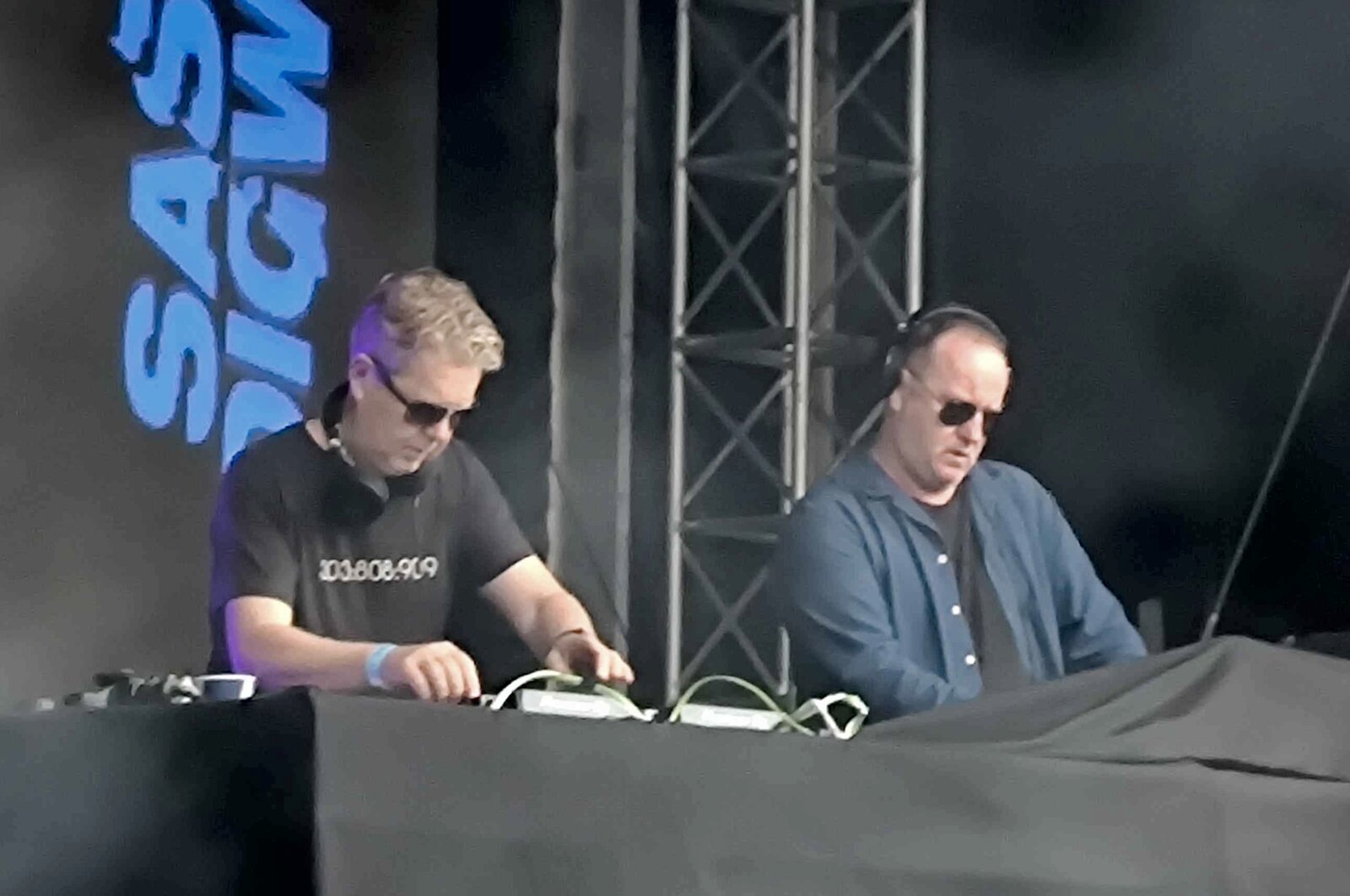
Before the partnership, there were two very different careers
Sasha entered Renaissance with a national reputation already growing fast through Shelley’s and the early club circuit. Digweed arrived by the considerably less glamorous route of sending a very good demo tape.
Renaissance founder Geoff Oakes received Digweed’s ‘DJ JD’ tape in July 1992, liked what he heard and later played it to Sasha. Digweed’s first Renaissance date followed on 5 September.
That detail matters because the partnership’s origin gets polished into mythology surprisingly often. Sasha didn’t descend from a cloud, discover Digweed in Hastings and anoint him. A promoter heard a tape.
The interesting bit starts afterwards.
Renaissance worked because they weren’t the same DJ
The usual shorthand says Sasha brought melody and Digweed brought darkness. It isn’t completely wrong, but take it literally and you miss half the records.
Both could play warm house. Both could go deep. Both could use trance. The difference was emphasis. Sasha often seemed more willing to head towards an emotional release; Digweed could sit inside rhythm and tension for longer.
In a short set, that distinction might barely matter. Across several hours it becomes useful. One DJ can pull the music towards light, the other can turn it back into pressure, and because the underlying taste overlaps the change doesn’t feel like somebody else has hijacked the booth.
Renaissance gave them repeated opportunities to learn that interaction in front of the same kind of audience. That is probably more important than any romantic story about two geniuses instantly recognising each other.
The Mix Collection put the club in a box without killing it
Renaissance: The Mix Collection arrived in 1994 across three CDs and turned the residency into something people could own. This wasn’t the first DJ mix album, and nobody needs the history rewritten to make it important.
What it did was treat a long progressive set like an actual piece of work. Tracks recur in different versions, blends are allowed to take time and the discs build through changes in mood rather than sprinting between obvious anthems.
The first disc is warmer than the later Sasha & Digweed mythology suggests. House remains central, and the whole thing feels closer to the atmosphere of a club slowly finding its direction than to the darker progressive sound that would follow.
The commercial success helped expand the market for serious DJ mixes, but the reason we still care is more basic. The fucking thing is still enjoyable.
If the programming had aged badly, nobody would care how historically important the packaging was.
Northern Exposure stopped trying to behave like a club compilation
Northern Exposure in 1996 is where the partnership becomes more ambitious. The two-disc North/South idea gave Sasha and Digweed permission to build something that could drop into ambience, breaks and strange transitional material without worrying whether it would keep a dancefloor moving every second.
The North disc can feel almost perversely slow by modern compilation standards. That’s part of the appeal. It creates a world first and only then worries about where the kick drum is.
Northern Exposure 2 followed in 1997 with tighter edits, more breaks and a stronger progressive-trance influence. Expeditions completed the run in 1999 as the wider scene itself became increasingly trance-facing.
Across the trilogy, the sound changes but the underlying idea remains: a DJ mix can have narrative shape without needing a voiceover telling you it’s a journey.
This is the part of the Sasha & John Digweed catalogue I’d use to explain the partnership to somebody who wasn’t there. Renaissance gives you the roots. Northern Exposure gives you the obsession.
America gave the partnership a second home
Sasha & Digweed developed a substantial American following in the second half of the 1990s. It’s important not to turn that into another lazy British-history story where two UK DJs somehow introduced electronic music to a continent that already had house and techno coming out of its ears.
What they did export very effectively was a specific UK-rooted progressive approach: long sets, gradual programming and a mixture of house, breaks and trance that could travel without becoming straightforward festival music.
Touring built the audience. Twilo gave it a home.
Twilo made time part of the music
The monthly Twilo residency in New York became the physical setting most closely associated with the partnership’s American reputation. Sources differ slightly on the exact starting date, so the sensible description is around 1996–97 until the club closed in May 2001.
The Phazon sound system is a huge part of the legend, but the more important ingredient might have been time. Extended sets allow a DJ to do things a ninety-minute slot simply doesn’t.
You can warm up properly. You can let the room dip. You can change genre without announcing it with a giant transition. You can introduce an idea and not pay it off for an hour.
That suited both DJs and made their differences more useful. Sasha could lift the room; Digweed could drag it back into tension. The handovers became part of the architecture.
Exact tales of ten- and twelve-hour sets get repeated with the confidence of sacred scripture and are difficult to verify consistently. The mythology can keep the numbers. The documented importance of extended programming is enough.
Superstar DJs playing like they hadn’t read the job description
By the late 1990s, Sasha & Digweed were absolutely part of superstar-DJ culture. Pretending otherwise is silly. Magazine covers, international touring, huge fees, DJ polls — they were not anonymous underground selectors hiding in a basement.
The interesting contradiction is that the actual programming could remain relatively patient and uncommercial in structure. Their fame suggested constant payoff; their best long sets often did the opposite.
That tension is one reason the partnership stayed credible to people who normally roll their eyes at superstar-DJ mythology. You could dislike the circus and still hear why the two people in the middle of it were good at their job.
Communicate is the sound of the relationship changing
Communicate arrived in 2000 and sounds very different from the romantic version of Sasha & Digweed preserved by Northern Exposure.
The first disc is darker, tighter and much more club-focused. Trancesetters, Saints & Sinners, Trisco and Killahurtz sit inside clipped percussion and long stretches of tension rather than widescreen ambient storytelling.
Critical reaction was divided, and it still divides listeners. That is not a flaw in the history; it’s the useful bit. Communicate captures the duo while progressive house itself is changing underneath them.
By this point their solo identities were also stronger. Sasha had Global Underground and an expanding production career. Digweed had Bedrock. The partnership could no longer be the only place either of them existed.
Communicate sounds like two DJs still working well together while already pulling towards different futures.
Delta Heavy, the pause and the fact they never needed a dramatic breakup
The 2002 Delta Heavy Tour became one of the partnership’s biggest projects, covering 31 US dates and reportedly drawing more than 85,000 people.
After that, joint activity reduced rather than ending with some giant falling-out story. Sasha concentrated more heavily on studio work and digital performance; Digweed kept expanding Bedrock and his radio platform.
They still appeared together periodically, and major reunion shows returned in 2016 around the twentieth anniversary of Northern Exposure.
The lack of a melodramatic breakup is fitting. The partnership worked because both men had individual careers. Eventually those careers simply occupied more of the calendar.
Why Sasha & John Digweed mattered
Their biggest contribution isn’t a single track or even a single mix. It’s an argument about how long-form DJing can work.
Renaissance showed that several CDs could feel like one extended piece of programming. Northern Exposure made the listening experience more atmospheric and conceptual. Twilo gave the same philosophy room to operate over genuinely long club sets.
They also proved that a DJ partnership does not need two selectors to become stylistically identical. The friction between Sasha’s melodic pull and Digweed’s appetite for sustained tension was useful.
Progressive house didn’t begin with them. America didn’t discover electronic music because they arrived. The mix CD wasn’t their invention. None of those inflated claims are necessary.
What they actually did is impressive enough: they made people care about the hours between the big records.
The mythology is massive; luckily, some recordings survive
Pre-streaming scarcity did wonders for Sasha & Digweed mythology. A famous set might exist as a copied cassette, half a radio recording, a CD-R with the wrong date written on it or somebody telling you for the tenth time how unbelievable Twilo was.
That kind of scarcity lets legends expand because most people cannot immediately check them.
The useful thing is that enough official and semi-official recorded work survives to test the reputation. Renaissance still flows. Northern Exposure still sounds ambitious. Communicate still sounds divisive. The long-set recordings that circulate still show two DJs thinking in hours rather than individual moments.
The legend definitely grew extra limbs over the years. The core of it survives inspection, which is more than you can say for plenty of 1990s club folklore.
Signature sound
There is no single Sasha & Digweed sound. Renaissance is warmer and more house-rooted; Northern Exposure is darker and more atmospheric; Communicate is tougher and more rhythmically locked.
What stays consistent is structure: long transitions, gradual escalation and an obsession with how one record changes the meaning of the next.
Sasha often pulls more readily towards melody and release; Digweed often enjoys prolonging tension. Treat that as a tendency, not a rule.
At their best, the partnership makes several hours feel shorter because the set keeps changing without constantly resetting.
Renaissance
Renaissance is where the partnership became more than two DJs on the same bill. Digweed’s demo reached Geoff Oakes in 1992, Sasha heard it, and repeated appearances gave the pair time to develop an actual shared language.
The Mix Collection in 1994 turned that residency into a physical release without reducing it to a greatest-hits package.
The importance is not some exaggerated ‘first ever’ claim. It is the seriousness with which the club sound was programmed, recorded and presented.
Northern Exposure
Across 1996, 1997 and 1999, Northern Exposure became the partnership’s clearest long-form statement.
The first release created the North/South concept and pushed into ambient music, breaks and deeper progressive territory. The sequel became tighter and more trance-facing. Expeditions completed the arc as the decade closed.
The three releases are connected less by one genre than by a belief that multiple discs should behave like one continuous piece.
Twilo
Twilo gave Sasha & Digweed something no mix CD could: a real room and enough hours to let a set wander.
The Phazon system became part of the club’s legend, but duration was just as important. Warm-up records could stay warm, peaks could be delayed and the partnership could move between styles gradually.
The exact marathon-set numbers have become folklore. The significance of extended programming has not.
Two profiles, one partnership
This page is about the partnership. Sasha’s individual profile covers Shelley’s, Global Underground, Xpander and his later technology-heavy period; John Digweed’s profile covers Hastings, Bedrock, Global Underground and Transitions.
Key releases and mixes
Renaissance: The Mix Collection
The 1994 breakthrough: three CDs translating the Renaissance residency into a serious long-form release.
Read the archive entry →Essential Mix — Phoenix Festival
A joint Radio 1 snapshot from 1996, right around the point Northern Exposure was redefining what their recorded partnership could sound like.
Northern Exposure
The classic two-disc atmospheric statement and probably the cleanest place to understand the partnership’s long-form ambition.
Northern Exposure 2
A tighter sequel that moves further into breaks, progressive house and trance.
Read the archive entry →Northern Exposure: Expeditions
The final Northern Exposure chapter, closing the decade with the progressive-trance influence pushed further forward.
Essential Mix — Homelands
A live festival-era broadcast from the period immediately before Communicate.
Communicate
The tougher, darker 2000 mix that catches both the partnership and progressive house in transition.
Read the archive entry →
Where to start
Renaissance: The Mix Collection CD1 is the obvious opener, for the warmer club-rooted partnership.
From there, put on Northern Exposure CD1. This is where the pair stop behaving like they’re merely documenting a night and start building a proper listening experience.
Communicate CD1 closes it out, showing how much harder, tighter and more club-focused the sound had become by 2000.
In The Mix Archive
Renaissance: The Mix Collection (CD1)
The opening disc of the 1994 breakthrough — warm, patient and far more house-rooted than the later mythology suggests.
Northern Exposure (CD1 — North)
The partnership goes cold, spacious and atmospheric. One of the clearest examples of their long-form method.
Northern Exposure 2 (CD1)
The follow-up tightens the idea and brings breaks and progressive trance further into the mix.
Communicate (CD1)
The 2000 version of Sasha & Digweed: darker, more percussive and deliberately less dreamy.
Key facts
- Demo tape
- Renaissance founder Geoff Oakes received John Digweed's demo tape in July 1992 and subsequently played it to Sasha
- First Renaissance date
- John Digweed played on 5 September 1992
- Renaissance: The Mix Collection
- Released in 1994
- Northern Exposure
- Followed in 1996
- Northern Exposure 2
- Followed in 1997
- Northern Exposure: Expeditions
- Completed the trilogy in 1999
- Twilo residency
- A recurring New York residency from around 1996–97 until the club closed in May 2001
- DJ Mag Top 100
- Sasha topped the poll in 2000; John Digweed followed in 2001
- Communicate
- Released in 2000
- Delta Heavy Tour
- The 2002 tour covered 31 US dates and was reported by its organisers as attracting more than 85,000 people
- Reunion shows
- After a lengthy period of less frequent joint performances, Sasha & Digweed formally reunited for major shows in 2016
Related archive listening
Sasha vs Digweed: What Was Actually Different?
The companion comparison article — what each DJ brought individually, why GU009 and GU006 sound different, and why the contrast made the partnership work.
Essential Mix
Nick Warren brings similar patience from a warmer, groovier angle and without the same duo mythology.
Essential Mix
Dave Seaman gives another Renaissance-era route through mid-90s progressive house, rooted more firmly in groove.
From the Collector's Shelf
Renaissance: The Mix Collection
Three CDs that show how wide progressive house could be — warm house, strange turns, huge records and nearly four hours of Sasha & John Digweed programming that still makes sense as one complete mix.
Northern Exposure
North drifts through ambient, breaks and psychedelic progressive music. South slowly pulls the club back into view. Hear them together and the complete journey makes far more sense.
Northern Exposure 2: East Coast / West Coast
Two discs, two moods and one properly thought-through journey: East Coast bends breaks, psychedelia and melody together; West Coast gets colder, straighter and more trance-facing without losing the patience that made Northern Exposure work.
Northern Exposure: Expeditions
The final Northern Exposure pushes the series firmly into 1999: darker progressive house, bigger trance pressure and enough restraint that Belfunk, Silence and Love Stimulation still feel earned rather than stacked.