John Digweed: Renaissance, Bedrock, Twilo and Progressive House
If you remember the name more than any single Digweed mix, that’s the point — John Digweed is what happens when patience becomes an entire career. Sasha got more of the early magazine mythology; Digweed sent a demo tape, got himself into Renaissance and then spent the next three decades making long sets feel like architecture. From Northern Exposure and Twilo to Global Underground, Bedrock and Transitions, the appeal is rarely one giant moment. It’s the slow fucking pressure between them.
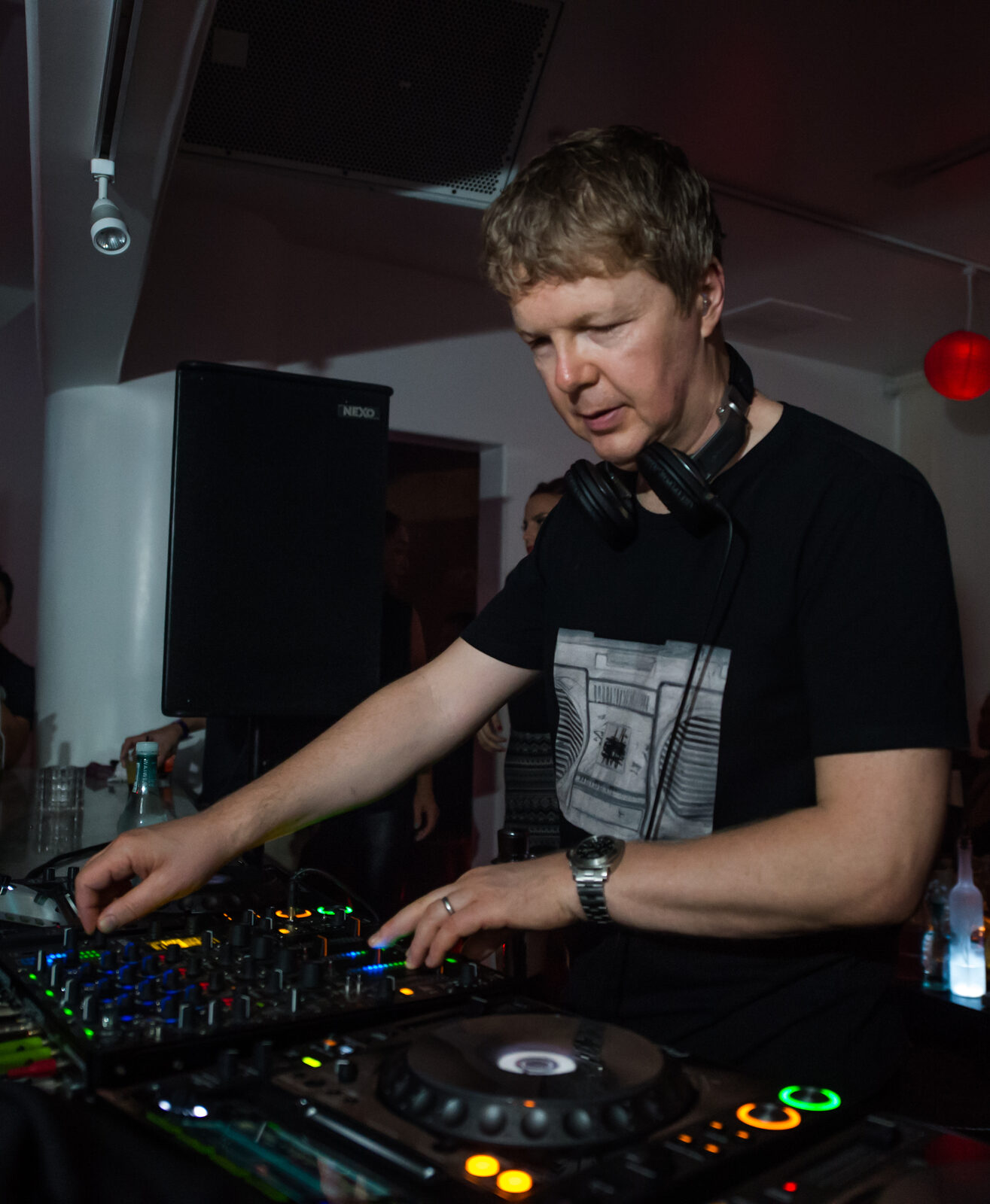
Hastings, a demo tape and the least glamorous breakthrough story imaginable
Digweed grew up in Hastings and was already DJing young, learning in local clubs and through the kind of long nights where you couldn’t survive by playing your five best records and going home.
A move to London didn’t instantly turn him into a star, so he went back to Hastings and did something more useful: promoted his own events, booked bigger names and put himself on the same bills. The Bedrock name has roots in that period, long before it became a label logo stuck on a thousand record bags.
The Renaissance breakthrough came through a demo tape. In July 1992, founder Geoff Oakes received a tape credited to ‘DJ JD’, liked it and later played it to Sasha. Digweed’s first Renaissance date followed on 5 September.
It is a much better story than the myth that Sasha magically discovered him in Hastings. Send good tape. Right person hears good tape. Get booked. Sometimes history doesn’t need a fucking screenplay.
Renaissance gave him the room to become John Digweed
Renaissance mattered because Digweed didn’t arrive with every part of the later persona already fixed. The club gave him repeated nights, a serious audience and enough time to develop alongside Sasha rather than simply support him.
The two shared plenty of musical territory but their instincts gradually separated. Sasha was often happier moving towards melody and emotional release. Digweed could sit inside rhythm, bass and tension for longer without worrying whether everybody had received their scheduled goosebumps.
That difference became useful in long back-to-back sets. One could redirect what the other had built without tearing the whole thing down.
It also helped progressive house avoid becoming one neat sound. Renaissance included warmth, piano, house, trance and deeper material; the later stereotype of Digweed as permanently dark and joyless only tells part of the story.
The Mix Collection made the partnership famous — Part 2 proved he didn’t need it
Renaissance: The Mix Collection arrived in 1994 and turned the Sasha & Digweed residency into a three-CD object people could replay at home. The importance isn’t that it was magically the first DJ mix. It wasn’t. It’s that it treated the relationship between records like the actual product.
For Digweed, the album was a massive leap in visibility. But the more revealing release came a year later when he mixed Renaissance: The Mix Collection Part 2 alone.
That matters because the duo can swallow the individual careers in retrospect. Part 2 showed early that John Digweed wasn’t simply ‘the darker one next to Sasha’. He could carry the long-form format under his own name.
The solo identity would become much easier to hear once Northern Exposure, Global Underground and Bedrock pushed him further away from the warmer Renaissance palette.
Northern Exposure is where the room gets darker
Northern Exposure in 1996 took the partnership away from straightforward club-document territory and towards something much more atmospheric. The North/South concept allowed ambient material, breaks, trance and progressive house to sit together without anybody panicking about keeping the kick drum running.
For Digweed, this period is important because his preference for sustained tension starts to become more obvious. The darker stretches are not just a lack of melody; they create space for the eventual lift to feel earned.
Northern Exposure 2 pushed further into breaks and progressive trance in 1997, while Expeditions completed the trilogy in 1999.
Across the three, you can hear the duo growing apart stylistically without breaking as a partnership. Sasha’s melodic instincts remain visible; Digweed increasingly sounds comfortable making the set feel slightly dangerous for longer.
That tension would suit Twilo very well.
Global Underground 006: Sydney is Digweed without Sasha standing next to him
Global Underground 006: Sydney arrived in 1998 and gave Digweed one of his clearest early solo statements. The two-disc format suited him almost embarrassingly well.
The sound is deeper, bassier and more rhythmically focused than much of the earlier Renaissance material. Tribal percussion and low-end movement matter as much as melody, and the overall effect is controlled rather than spectacular.
Not every contemporary review treated Sydney as some untouchable masterpiece, and that’s fine. We don’t need to rewrite history every time a beloved old CD turns thirty.
What the release does brilliantly is make Digweed’s individual method obvious. The records feel chosen for what they can do over time, not for how good the title looks in a tracklist.
That same logic runs straight into Bedrock.
Twilo: give him hours and leave him alone
The Sasha & Digweed residency at Twilo in New York became one of the defining pieces of both careers. Sources vary around the exact start, but by the late 1990s the monthly night had become central to their American reputation.
The club’s Phazon system gets mentioned constantly, but time was just as important as sound. Extended sets meant warm-up records could actually warm up. Energy could fall without everybody assuming the DJ had lost the plot. A peak could arrive three hours after the idea that eventually caused it.
That environment was made for Digweed. His whole strength is the bit between obvious moments: the gradual shift in rhythm, the tiny increase in pressure, the point where a record that looked unremarkable on paper suddenly makes sense.
Stories about exact ten- or twelve-hour set lengths have been repeated until they’re basically part of club folklore. The precise numbers matter less than the underlying truth: Twilo gave Sasha and Digweed room to play long, and Digweed built a large part of his reputation on what he did with that room.
If your idea of DJing is constant drops, a good Digweed set can initially feel like nothing is happening. Then an hour disappears.
Bedrock is three things, and all of them matter
Bedrock gets used as shorthand for John Digweed’s whole world, but it actually covers three connected things: the production partnership with Nick Muir, the club-night brand and Bedrock Records.
The production partnership came first, with Digweed and Muir creating records including For What You Dream Of, Set in Stone / Forbidden Zone, Heaven Scent and Voices. The club name had roots in Digweed’s Hastings promoting before the monthly Bedrock night at Heaven in London became nationally important from 1998.
Bedrock Records followed in 1999 and gave Digweed something far more useful than another successful mix CD: infrastructure. A label could release the music appearing in his sets, support other producers and keep evolving after the original progressive-house boom stopped being fashionable.
This is probably the biggest difference between Digweed and several superstar DJs from the same era. His career wasn’t only built on being booked to play. He built a place for the music to keep existing.
Renaissance made him famous. Bedrock made him durable.
Nick Muir, Heaven Scent and the art of making repetition feel massive
Nick Muir is essential to the production story. Bedrock records were a genuine partnership, not a successful DJ’s name stuck on somebody else’s studio work.
Heaven Scent became the first release on Bedrock Records in 1999 and the track most closely associated with Digweed’s career. The idea was connected to the end of a Bedrock night at Heaven, which explains a lot about how it behaves.
It doesn’t win through constant change. It repeats, builds, tightens and keeps moving tiny pieces until the same basic material suddenly feels enormous.
That is basically Digweed’s DJ philosophy in record form. The drama comes from accumulation.
If you only hear the famous riff without the minutes around it, you miss half the bloody point.
Communicate, MMII and progressive house getting harder to describe
By 2000, Sasha & Digweed’s Communicate sounded noticeably tougher and more tonally consistent than Northern Exposure. The dreamy widescreen stuff had receded; clipped percussion, low-slung bass and darker club pressure were taking over.
Reaction was divided then and remains divided now. Good. It should be. Communicate is interesting precisely because it catches the partnership — and progressive house itself — moving away from the sound that made both famous.
By the early 2000s the genre was splintering into darker progressive, breaks, tribal material and techier production. Digweed didn’t need a dramatic reinvention because his preference for rhythm and sustained tension already fitted the shift.
MMII in 2002 is a particularly clean statement of that solo identity: darker, more breaks-influenced and less interested in obvious melody than the Renaissance years.
Rather than progressive house disappearing, records like this show it fragmenting.
Transitions turned consistency into a weekly habit
Digweed’s relationship with radio became another long-term part of the career. His first BBC Radio 1 Essential Mix was broadcast on 5 March 1994, before The Mix Collection had even arrived.
From September 2000 until January 2011 he hosted a weekly two-hour show on Kiss. The programme later became known as Transitions and continued far beyond the original radio slot.
That longevity matters because it shows what Digweed has always done well: turn consistency into identity. A huge compilation every eighteen months can create mythology. A weekly show forces you to keep finding records.
Bedrock and Transitions together meant Digweed didn’t have to live forever inside Renaissance nostalgia. He had a label and a continuing broadcast platform carrying new music forward.
Why John Digweed matters
Digweed’s great skill is holding attention without begging for it.
His best sets don’t need a constant stream of recognisable tracks or gigantic breakdowns. The pressure comes from sequencing: a bassline becomes important because of the hour before it; a melodic record works because he has starved the set of that kind of release.
That approach made him ideal for long nights, mix CDs and radio. It also makes the strongest recordings age well because they aren’t built entirely around production tricks designed to shock somebody for thirty seconds.
Bedrock adds the other half of the story. The production partnership, club and label turned his taste into an ecosystem rather than just a DJ brand.
Sasha got more of the early mythology. Digweed built a bloody institution.
Signature sound
Long blends, low-end pressure and a willingness to delay the obvious peak until the set has properly earned it.
The familiar ‘Digweed = dark’ shorthand is only partly useful. Early Renaissance material can be warm and melodic; what stays consistent is control rather than permanent gloom.
By the late 1990s, tribal percussion, deeper progressive records and sustained rhythmic tension became increasingly central to the sound.
The best Digweed transition often feels less like one record replacing another and more like the room slowly changing temperature.
Sasha & John Digweed
The partnership developed at Renaissance after Geoff Oakes received Digweed’s 1992 demo and later played it to Sasha. It worked because their tastes overlapped without becoming identical.
Renaissance: The Mix Collection gave them the recorded breakthrough; Northern Exposure turned the partnership into something more atmospheric and explicitly long-form; Twilo gave them enough hours to stretch the idea in a club.
By Communicate, the sound had become tougher and more focused as their individual identities strengthened. Sasha moved further towards production and technology; Digweed built Bedrock into the centre of his own career.
The partnership mattered, but one of its strengths is that neither career collapsed when the back-to-back sets became less frequent.
Bedrock
Bedrock is the clearest reason Digweed’s story doesn’t end with 1990s progressive-house nostalgia.
As a production partnership with Nick Muir it created records including For What You Dream Of and Heaven Scent. As a club night it gave Digweed a physical room to shape around his taste. As Bedrock Records it became a platform for the music long after the original superclub boom had faded.
Those three strands fed each other without being the same thing. The club informed the records, the records appeared in the sets, and the label could release artists who fitted the world Digweed was building.
That’s not as glamorous as a magazine cover calling somebody God. It’s probably more useful.
From the Classic Tracks chart
Bedrock — Heaven Scent (1999). Digweed and Nick Muir turning repetition, tension and one huge delayed release into a defining progressive record.
Bedrock — Voices (2000). A deeper, more atmospheric example of the production partnership as the progressive sound started getting darker.
Both appear in the Classic Tracks Top 10.
Key releases and mixes
Renaissance: The Mix Collection
The three-CD breakthrough that turned the Renaissance residency into a recorded partnership and put Digweed in front of a much larger audience.
Read the archive entry →Renaissance: The Mix Collection Part 2
The 1995 solo Renaissance mix that proves his recorded identity was already developing outside the Sasha partnership.
Essential Mix
Digweed on Radio 1 before The Mix Collection arrived — an early national snapshot of the programming style.
Northern Exposure
The partnership gets darker, more atmospheric and more willing to use ambient music, breaks and trance as part of one long structure.
Northern Exposure 2
The sequel broadens the palette and pushes further towards breaks and progressive trance.
Read the archive entry →Global Underground 006: Sydney
Digweed’s first solo Global Underground release and one of the clearest early documents of the deeper individual sound.
Read the archive entry →Heaven Scent
The first Bedrock Records release and the production that most neatly connects the club, label and Digweed/Muir partnership.
Communicate
A tougher Sasha & Digweed mix showing the partnership at the point where progressive house itself was changing.
Read the archive entry →MMII
A dark, breaks-heavy solo mix that makes Digweed’s early-2000s identity very clear.
Where to start
Renaissance: The Mix Collection CD1 gets you the partnership and the warmer early context, so start there.
Global Underground 006: Sydney (CD1) is next for solo Digweed — this is where the deeper, rhythm-led identity becomes much easier to hear. It’s in the Archive below.
Finish with Heaven Scent. It’s the Bedrock philosophy compressed into one record: repeat, tighten, wait, then finally let the bastard go.
In The Mix Archive
Renaissance: The Mix Collection (CD1)
The Renaissance breakthrough: warm, patient and built around the relationship between records rather than a pile of highlights.
Global Underground 006: Sydney (CD1)
Solo Digweed with the full canvas: deep, percussive and patient until Albion’s Air finally lets the light in.
Northern Exposure (CD1 — North)
The North disc lets the partnership get colder, slower and much more atmospheric.
Northern Exposure 2 (CD1)
A tighter sequel with breaks and progressive trance moving further into the picture.
Communicate (CD1)
The duo in 2000, sounding tougher and more locked into club pressure as Bedrock becomes increasingly central to Digweed’s solo identity.
Key facts
- Early experience
- Built much of his early DJ experience through club nights and events in Hastings
- Demo tape
- Received by Renaissance founder Geoff Oakes in July 1992
- First Renaissance date
- 5 September 1992
- Renaissance: The Mix Collection
- Released with Sasha in 1994
- Renaissance: The Mix Collection Part 2
- Mixed solo in 1995
- First BBC Radio 1 Essential Mix
- Broadcast on 5 March 1994
- Global Underground 006: Sydney
- Released in 1998
- Bedrock Records
- Launched in 1999, with Heaven Scent among the defining releases at its beginning
- DJ Mag Top 100
- Voted number one in 2001
- Kiss radio show
- Ran weekly from September 2000 until January 2011 and developed into Transitions
Related archive listening
Sasha vs Digweed: What Was Actually Different?
The comparison in full: Sasha’s appetite for release, Digweed’s rhythm-and-tension instinct and the records that make the difference audible.
Essential Mix
Warren is another master of patience, but with a warmer and more melodic personality around the same broad progressive period.
Essential Mix
Seaman gives you the Renaissance connection from a more house-rooted angle.
Global Underground 012: Buenos Aires (CD2)
Another Global Underground DJ using two discs to build pressure differently — useful beside Sydney.
From the Collector's Shelf
Renaissance: The Mix Collection
Three CDs that show how wide progressive house could be — warm house, strange turns, huge records and nearly four hours of Sasha & John Digweed programming that still makes sense as one complete mix.
Northern Exposure
North drifts through ambient, breaks and psychedelic progressive music. South slowly pulls the club back into view. Hear them together and the complete journey makes far more sense.
Global Underground 006: Sydney
Hear Digweed define his solo sound through bass, percussion and patient pressure — two complete discs that explain his style better than a biography ever could.
Northern Exposure 2: East Coast / West Coast
Two discs, two moods and one properly thought-through journey: East Coast bends breaks, psychedelia and melody together; West Coast gets colder, straighter and more trance-facing without losing the patience that made Northern Exposure work.