Sasha: Renaissance, Northern Exposure, Global Underground and Progressive House
If you owned a Renaissance CD purely because Sasha’s name was on it, you weren’t alone — he’s one of those DJs where the mythology arrived almost before the evidence. Mixmag was asking whether he was the ‘Son of God’ before Renaissance: The Mix Collection had even landed, and by the end of the 1990s his name had become shorthand for progressive house whether he liked the label or not. Strip away the magazine covers, though, and the interesting bit is simpler: he was bloody good at making several hours of music feel like one thing. From Shelley’s and Renaissance through Northern Exposure, Global Underground and Xpander, patience was the trick.
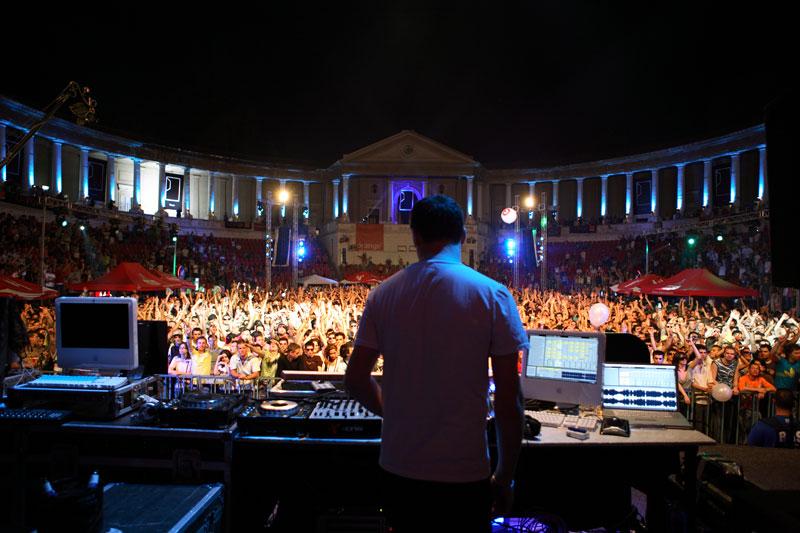
Before the myth got completely out of hand
Sasha — Alexander Paul Coe — came through the British club circuit as acid house was blowing open the old rules about what a DJ could play and how long a set could take to get somewhere. Manchester’s Haçienda formed part of that education, with Jon DaSilva regularly cited as an influence on the way Sasha thought about mixing and programming.
The career becomes much easier to pin down around 1990, when he took up a residency at Shelley’s Laserdome in Stoke-on-Trent. Shelley’s was a converted cinema, not some sacred progressive-house temple, and the music was still full of the euphoric piano house and Italian records that defined the period. That’s worth remembering because later history sometimes makes early Sasha sound as though he emerged fully formed, playing twelve-minute moody progressive records into a cloud of dry ice.
He didn’t. The warmer, more openly euphoric stuff was part of the story. What started to separate him was the way he arranged it. Even before the sound became darker and more atmospheric, Sasha was learning how to stretch a build, hold a record longer than expected and make the next one feel like a continuation rather than a reset.
The press noticed quickly. Mixmag’s infamous ‘Son of God’ cover in February 1994 is now almost too easy to laugh at, but the timing is revealing: Renaissance: The Mix Collection still hadn’t been released. The reputation had already become enormous on the strength of club sets, tapes, word of mouth and a media machine that absolutely loved a larger-than-life DJ story.
That could have ended badly. Plenty of people get mythologised before the work catches up. Sasha’s problem — or advantage — is that a lot of the recordings that followed were actually fucking excellent.
Renaissance gave the sound somewhere to live
Renaissance launched in Mansfield in 1992 and became one of the key places where the post-rave British club scene started to look and sound more considered. Longer sets, deeper selections and a more deliberate sense of progression suited Sasha perfectly.
John Digweed entered that world after Renaissance founder Geoff Oakes received his demo tape and played it to Sasha. The partnership that followed is often retold as a neat little legend about Sasha discovering Digweed somewhere in Hastings. The real story is less cinematic and more believable: Digweed sent a very good tape to the right person, Oakes recognised it, and Sasha heard it afterwards.
What mattered was what happened once they were in the same booth. Their tastes overlapped enough to make a long set coherent, but not so completely that they became interchangeable. Sasha leaned more readily towards melody and emotional release; Digweed increasingly enjoyed sitting in tension for longer. Those are tendencies, not rigid job descriptions, but the contrast gave the partnership shape.
Renaissance also arrived at exactly the right moment for the sound later called progressive house. Nobody needs another daft claim that one club or two DJs ‘invented’ the genre. They didn’t. What Renaissance did was give that emerging approach a highly visible home, and Sasha became one of the faces attached to it.
The Mix Collection is important because it still works
In 1994, Sasha and John Digweed released Renaissance: The Mix Collection across three CDs. It wasn’t the first DJ mix album and it didn’t invent long blends, but it treated the format with a seriousness that suddenly made a lot of other compilations look like a pile of current tunes shoved onto a disc.
The first disc is warmer and looser than people who only know late-90s progressive house might expect. Leftfield, Bedrock, Rhythm Invention, The Disco Evangelists, Sunscreem — the records are allowed to sit, change shape and hand ideas to each other. The attraction isn’t just the tracklist. It’s why track six makes sense after track five.
That is the bit Sasha was especially good at. A big record could be held back because the room, or the mix, wasn’t ready for it. Something apparently understated could become essential because of what surrounded it. When people talk about ‘journey’ DJing now it can sound like marketing bollocks, but the good Sasha mixes actually demonstrate the idea.
Commercially, The Mix Collection helped prove there was a serious audience for DJ-led albums. Musically, it gave people outside Renaissance a way to hear the programming philosophy that had previously depended on being in the club or getting hold of a tape.
More than thirty years later, the strongest argument for the album is still the least complicated one: put it on from the beginning and it doesn’t feel like homework.
Northern Exposure got colder, stranger and better for it
Northern Exposure arrived in 1996 and stopped pretending the mix CD had to behave like a club night. The two-disc North/South structure gave Sasha and Digweed permission to go slower, darker and considerably weirder.
Ambient passages, breaks, dubby progressive records and trance were allowed to bleed into each other. The North disc in particular can take its sweet bloody time before it resembles conventional dancefloor momentum. That’s exactly why it works.
Where Renaissance still carries a lot of house warmth, Northern Exposure feels more widescreen and unsettled. The duo are less concerned with keeping energy at one consistent level and more interested in what happens when you drop it, leave space and rebuild.
Northern Exposure 2 followed in 1997 with tighter edits, more breaks and a stronger progressive-trance pull. Expeditions closed the trilogy in 1999 as that trance influence became even harder to ignore.
If you want one body of work that explains why Sasha and Digweed became so closely associated with long-form progressive mixing, this is it. Not because every second is perfect, but because the records are arranged like the beginning, middle and end actually fucking matter.
Essential Mix mattered because you couldn’t just stream the bastard later
Sasha’s first BBC Radio 1 Essential Mix went out on 15 January 1994, only a few months into the programme’s life and before The Mix Collection appeared.
That matters more than it sounds now. A two-hour national broadcast was one of the few ways somebody nowhere near the right club could hear a famous DJ doing the thing they were famous for. There was no official archive sitting on your phone. Miss it and you were into cassettes, copied tapes, somebody’s CD-R or pure hearsay.
That scarcity helped Sasha’s mythology grow, but it also meant the Essential Mix could expose the actual method. The long build, the room left around records, the move between house and darker progressive material — the stuff people described after a night out was suddenly preserved well enough to judge.
This is one reason early Sasha recordings are still interesting. You can hear the reputation before it gets smothered by the superstar-DJ years.
Global Underground gave solo Sasha his own passport
Sasha entered Global Underground with GU009: San Francisco in 1998, followed by GU013: Ibiza in 1999. They arrived when the label’s city-and-DJ formula was becoming one of the defining pieces of late-90s progressive-house culture.
San Francisco is the moodier one for me. It starts deep and slightly psychedelic, with tracks such as Freaky Chakra, Attaboy and Medway giving the first disc a patient, unsettled feel before the trance influence becomes more obvious.
Ibiza is bigger and more immediately associated with Sasha’s late-90s peak. It also captures a useful crossover moment: progressive house, progressive trance, breaks and increasingly widescreen production all sitting inside the same two-disc set without sounding like four separate genres fighting in a bag.
The city branding obviously helped turn both releases into objects people remember, but the music has survived the packaging. That’s important. Nostalgia can make an average old mix sound better than it was; these two don’t need much charity.
If anything, Global Underground was ideal for Sasha because the format rewarded exactly what he already did: two discs, loads of room, no need to rush and a label perfectly happy to make the whole thing look expensive.
Xpander is eleven minutes of refusing to hurry up
Xpander landed in 1999 as the centrepiece of the Xpander EP and became Sasha’s defining original production. The title referenced the Oberheim Xpander synth, but the important bit is what the record does with time.
In full form it runs for roughly eleven minutes and behaves like a Sasha set compressed into one track. Layers arrive gradually. Melodic ideas appear, disappear and return. The big release only works because the record has spent ages making you wait for it.
That sounds obvious when written down. It isn’t. Plenty of long progressive records are just short ideas wearing enormous trousers. Xpander earns the runtime.
The wider EP — including Belfunk, Rabbitweed and Baja — showed that Sasha’s production identity was becoming more than a DJ occasionally putting his name on a record. Xpander also pushed strongly into progressive trance without losing the patient architecture underneath.
If somebody wants one track rather than a two-hour mix to understand Sasha’s appeal, this is probably the cleanest answer.
Airdrawndagger arrived while progressive house was changing underneath him
Airdrawndagger finally appeared in 2002 after years of expectation. It was promoted as Sasha’s debut artist album even though The Qat Collection had existed since 1994, and it landed at a slightly awkward moment for anybody hoping for a simple victory lap.
Progressive house itself was fragmenting. The warm mid-90s sound had already splintered into darker progressive, breaks, techier production and other neighbouring styles. Twilo had closed in 2001. The superclub era was starting to lose some of its certainty.
The album leaned into that change. Working with collaborators including Charlie May, Junkie XL and James Holden, Sasha moved through ambient electronics, breaks and detailed progressive textures rather than trying to make an album of twelve Xpanders.
Reaction was mixed, which is probably healthier than pretending everything connected to Sasha automatically deserves five stars. Some people loved the production depth and atmosphere; others missed the immediacy of his best mixes and club records.
What makes it useful now is exactly that tension. It sounds like an artist whose scene is moving and who would rather move with it than keep reheating 1999.
Technology changed; the obsession with control didn’t
By the mid-2000s Sasha became one of the most visible DJs from his generation to move heavily into Ableton Live. Involver blurred the line between DJ mix, remix project and studio production, while the custom Maven controller let him manipulate parts of tracks rather than simply play complete records one after another.
That period sits a little beyond The Mix Archive’s main focus, but it fits the story rather than breaking it. Sasha had always cared about transitions, structure and how one piece of music could be made to behave differently because of what sat around it.
Digital tools simply gave him more control over the same obsession. You can love or hate the laptop-DJ era, but in Sasha’s case it wasn’t some desperate attempt to look futuristic. It was a fairly logical extension of how he had already been thinking for years.
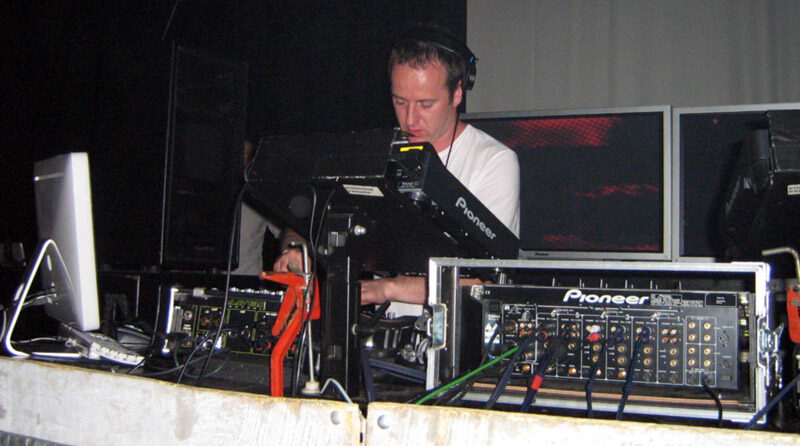
Why Sasha still matters
Strip away the ‘Son of God’ nonsense, the rankings and the superstar-DJ mythology and Sasha’s best quality is almost boringly simple: patience.
He understood that a set can be emotional without constantly screaming for attention. A huge record lands harder if you haven’t spent the previous forty minutes firing huge records at people. A quiet transition can matter more than a clever one if it changes the whole direction without breaking the spell.
That is why Renaissance, Northern Exposure, San Francisco and Ibiza survive as complete listens. Plenty of the individual tracks are classics, but the mixes are remembered because of the relationship between them.
He also occupied that awkward space between underground credibility and mass attention better than most. Piano house, deep progressive, breaks, trance — the palette changed constantly without the programming turning into a fucking jumble sale.
The mythology definitely overshot the mark at times. The annoying thing for anyone hoping to puncture it completely is that the recorded evidence keeps getting in the way.
Signature sound
Sasha’s sound changed too much to reduce to one genre. Shelley’s was warmer and more piano-led; Renaissance stretched into progressive house; Northern Exposure opened the door to ambient music, breaks and trance; Global Underground made the late-90s version larger and more polished.
The constant was pacing. Long transitions, delayed payoffs and a willingness to let a record sit long enough to change the mood are more useful identifiers than any BPM or genre label.
Melody matters, but the best Sasha sets don’t throw it around constantly. Emotional records work because he leaves space around them.
When it’s working properly, the transition isn’t the point. You suddenly realise the set has moved somewhere else and you didn’t notice the exact second it happened.
Sasha & John Digweed
Sasha & John Digweed became a partnership at Renaissance because their differences were useful rather than awkward. They shared enough music to sound coherent together, but Sasha’s pull towards melody and Digweed’s appetite for sustained tension kept a long set from becoming one flat personality.
Renaissance: The Mix Collection caught the partnership at its warmest and most house-oriented. Northern Exposure moved it into darker, more atmospheric territory. By Communicate in 2000, the sound had become tougher, tighter and much less interested in the romantic widescreen feel of the mid-90s.
Twilo in New York gave the pair the time and sound system to stretch those ideas across genuinely extended sets. Exact claims about ten- or twelve-hour marathons get repeated so often they’re difficult to separate from mythology, but the importance of long-form programming to the residency is not in much doubt.
The individual careers eventually pulled in different directions — Sasha towards production and digital performance, Digweed deeper into Bedrock — which is probably why the partnership remains interesting. They weren’t two halves of one act. They were two separate DJs who happened to be bloody good together.
Key releases and mixes
Renaissance: The Mix Collection
The partnership’s breakthrough mix and still the warmest place to start: three CDs proving that track order, patience and transitions could be the actual point of a commercial compilation.
Read the archive entry →Essential Mix
Sasha on Radio 1 before the big mix-CD mythology fully arrived — useful because the programming is already there.
Read the archive entry →Northern Exposure
The pair stop trying to recreate a club night and build something darker, slower and much more atmospheric for home listening.
Northern Exposure 2
The concept gets tighter, breaks become more important and the trance influence moves further forward.
Read the archive entry →Global Underground 009: San Francisco
Solo Sasha inside the Global Underground city format: deep, psychedelic progressive house gradually opening into a wider late-90s sound.
Read the archive entry →Global Underground 013: Ibiza
The release most people associate with peak late-90s Sasha, and one that still works as a two-disc listen rather than just a nostalgia object.
Xpander EP
The defining Sasha production: eleven minutes of melodic tension, patience and a payoff that only works because he makes you bloody wait for it.
Communicate
A tougher, more club-focused Sasha & Digweed mix that sounds deliberately different from Northern Exposure.
Read the archive entry →Airdrawndagger
A detailed, breaks-and-ambient-heavy studio album arriving just as the progressive scene around him was starting to fragment.
Where to start
Renaissance: The Mix Collection CD1 is the place to begin if you want the warmer early Sasha & Digweed sound and the point where the mix-CD reputation really starts.
Northern Exposure CD1 comes next — play it start to finish. It is darker, stranger and a much better demonstration of the long-form ‘journey’ idea people keep talking about.
For solo Sasha, follow with Global Underground 009: San Francisco CD1, then Xpander. One shows the DJ; the other compresses the same patience into a single record.
In The Mix Archive
Renaissance: The Mix Collection (CD1)
The warm, patient opening to the release that turned the Renaissance partnership into something people could take home.
Essential Mix
Sasha on national radio before The Mix Collection landed — the reputation is already huge, and the programming explains why.
Northern Exposure (CD1 — North)
Cold, spacious and in absolutely no rush to become a conventional club mix. Essential Sasha & Digweed.
Northern Exposure 2 (CD1)
A tighter sequel with more breaks and a stronger progressive-trance pull.
Communicate (CD1)
The duo in 2000: darker, tougher and more locked into club pressure than the Northern Exposure years.
Global Underground 009: San Francisco (CD1)
Solo Sasha in 1998, deep and psychedelic before gradually opening into the bigger late-90s progressive/trance sound.
Key facts
- Early residency
- Shelley’s Laserdome, Stoke-on-Trent, 1990–91, where his national reputation was built
- Renaissance
- The club most closely associated with his early progressive-house period and his partnership with John Digweed
- Renaissance: The Mix Collection
- Released in 1994
- First Essential Mix
- BBC Radio 1, 15 January 1994
- Northern Exposure
- 1996; established the North/South two-disc journey concept
- Global Underground
- 009: San Francisco (1998) and 013: Ibiza (1999)
- Xpander EP
- Reached number 18 on the UK Albums Chart in 1999
- DJ Mag Top 100
- Number one in 2000; remained inside the Top 10 through 2008
- Airdrawndagger
- Released in 2002
- Digital setup
- Later adopted Ableton Live and developed the custom Maven controller
Related archive listening
Sasha vs Digweed: What Was Actually Different?
A direct comparison of the melodic pull, sustained tension, solo Global Underground mixes and why the partnership worked.
Essential Mix
Warren is a useful comparison because the patience is similar but the personality is warmer, groovier and less wrapped in Sasha-style mythology.
Essential Mix — The Goa Mix
Oakenfold from the same 1994 radio era, doing something far more cinematic and theatrical with the long-form format.
Essential Mix
Seaman brings a house-rooted Renaissance perspective and considerably less superstar-DJ baggage.
Global Underground 012: Buenos Aires (CD2)
A late-90s Global Underground comparison showing a different way to control two discs without chasing constant peaks.
From the Collector's Shelf
Global Underground 009: San Francisco
Hear a moodier Sasha than the Ibiza mix that followed — deep, psychedelic progressive house slowly opening into darker progressive trance across one patient journey.
Global Underground 013: Ibiza
Sasha goes widescreen: a deep first disc earns the rush of Perception, Xpander, Mercury & Solace and Heaven Scent without losing the discipline of a complete long mix.
Join the conversation
Discuss classic progressive house and trance, share memories and discover more mixes with The Mix Archive community.
Visit the Facebook group (opens in a new tab)